


Your bathroom lighting questions answered!
If you’re perplexed by bathroom lighting then look no further than this comprehensive guide.


Document Contents:
- Why bathroom lights are different
- IP ratings explained
- Bathroom zones explained
- What lights are suitable for bathrooms
- Styles of bathroom lights available
- Top tips for bathroom lighting
Why Bathroom Lighting Needs Special Care
Bathrooms are high-risk zones for moisture and water exposure. Electrical fittings must be splash-proof or waterproof to be bathroom safe, and designed to maintain their integrity over time. This guide gives you everything you need to know about lighting a bathroom, wet room, shower room or ensuite—in one place.

Why are bathroom lights different?
As everyone knows, water and electricity should never mix. It’s because of this that bathroom lights are different. They require special attention in production to ensure that splashes, steam, condensation etc can’t ingress and cause faults; or worse – injury.
In order to ensure safety, bathroom lights are made to specific ratings. Which can vary in requirement depending on the location they are sited within the bathroom. These are called IP Ratings.
Dive in and explore bathroom safe lighting collections Bathroom Lighting UK safe lighting.
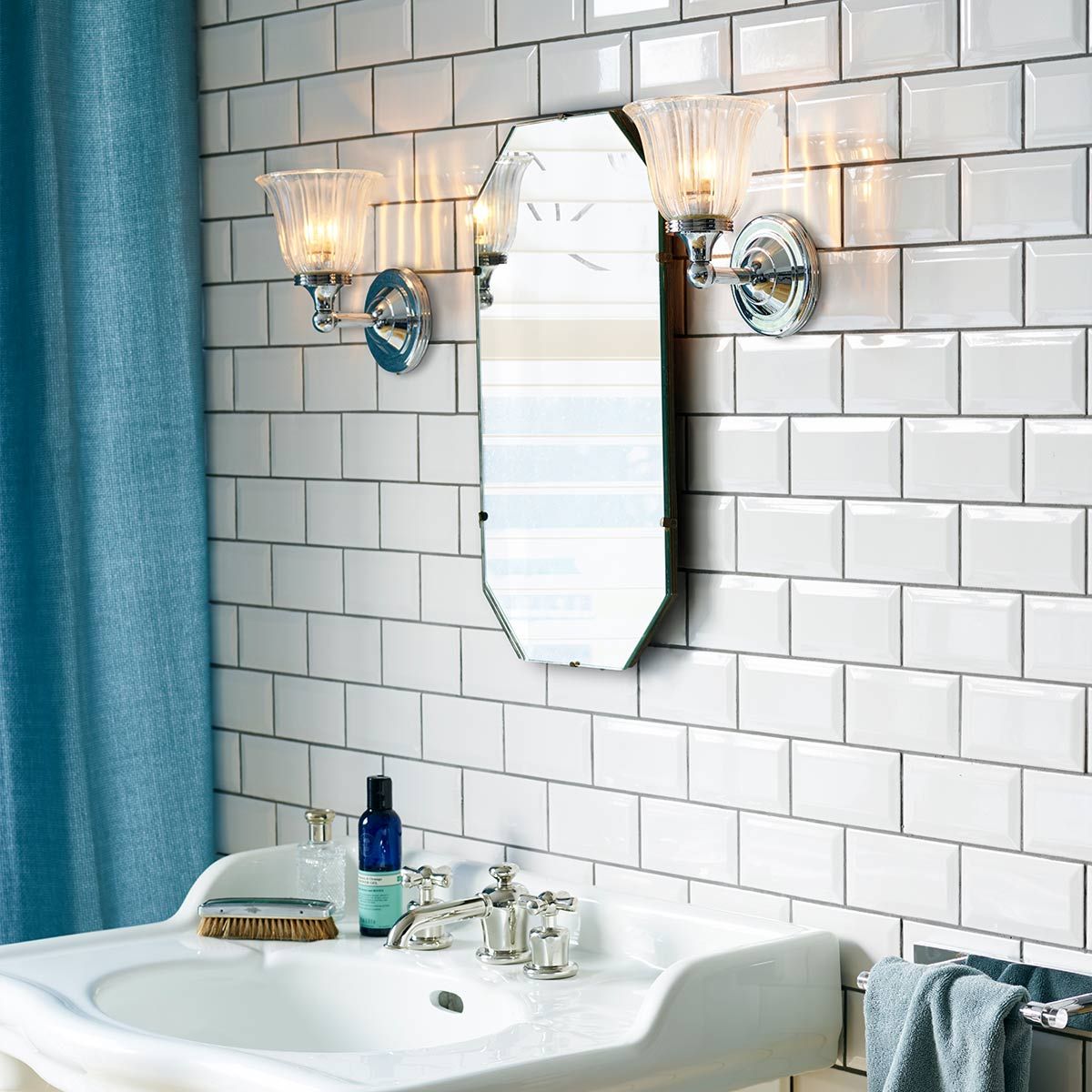
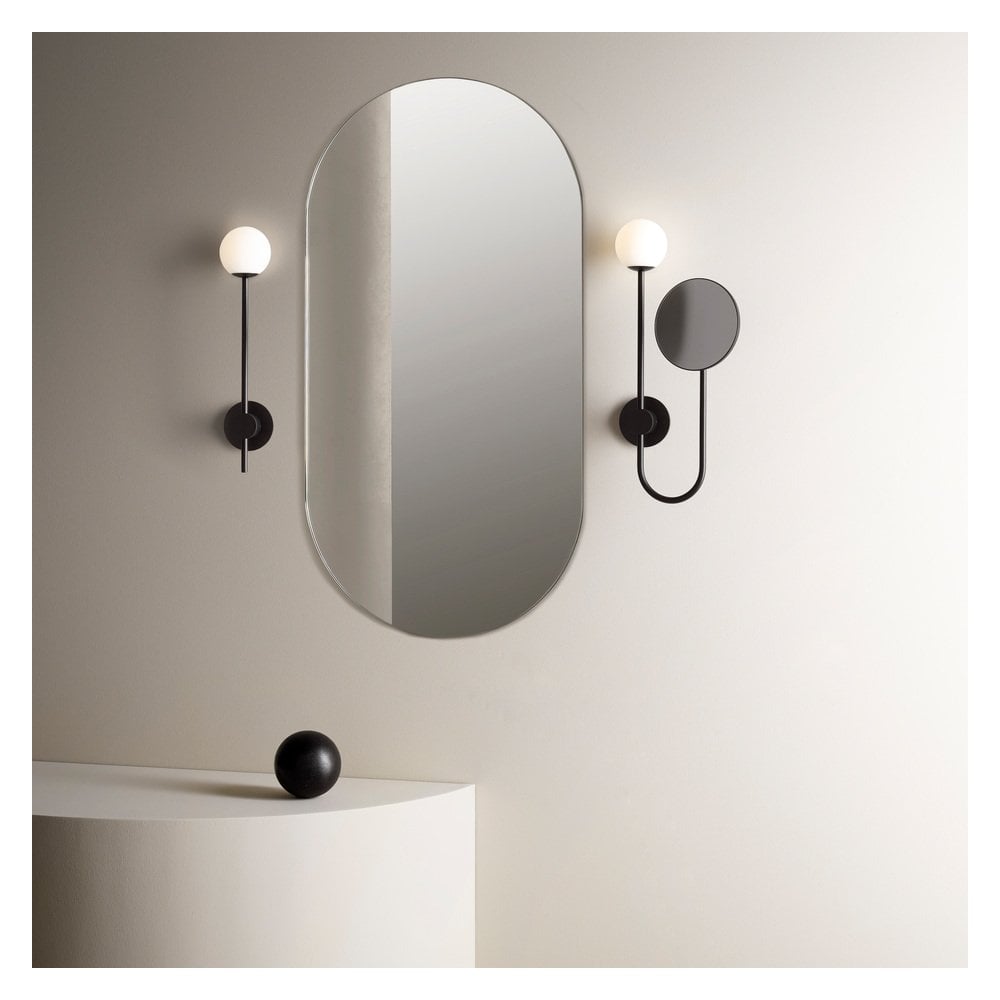
IP Ratings
IP stands for “Ingress Protection”. It indicates the protection level against solids and liquids. “IP” is followed by two digits with the first one indicating solids protection and the second indicating liquids protection.
First Digit
- 0 – Not Protected
- 1 – Protected from objects larger than 50mm
- 2 – Protected from objects larger than 12.5mm
- 3 – Protected from objects larger than 2.5mm
- 4 – Protected from objects larger than 1mm
- 5 – Protected from majority of dust
- 6 – Dust tight
Second Digit
- 0 – Not Protected
- 1 – Protected from vertical drips of water
- 2 – Protected from drips of water up to 15° from vertical
- 3 – Protected from spraying water up to 60° from vertical
- 4 – Protected from spraying water from all directions
- 5 – Protected from water jets
- 6 – Protected from powerful water jets
- 7 – Suitable for immersion up to 1 metre
- 8 – Suitable for continuous immersion beyond 1 metre
So now you know what IP Ratings are and what they mean, what rating do you need? This depends on what zone in the bathroom the light will be fitted. Let’s look at bathroom zones.
Bathroom Zones
Bathrooms, shower rooms en-suites come in various shapes and sizes. So do the bath tubs, types and shower cubical enclosures it would be difficult to say how to light this space effectively and importantly safely without working out which area’s are potentially the most at risk of water and electric coming together. Around the taps, bath tub and shower is classed as a wet area. Zone 0 is the area to take most care so a higher IP rating will be required. Zone 1 will have a slightly lower rating, Zone 2 lower again and areas outside of these zone any light without an IP rating could be used. Commonly IP44 Lights are used in most zone except zone 0.
The bathroom is divided into 4 areas. These are called “zones”. Each bathroom zone requires a certain level of IP Rating to be considered safe. To be specific it’s the second digit in the IP Rating which you need to consider for bathrooms. These consist of:
- Zone 0 – This is inside the bath or shower itself. Lights in this zone need to be low voltage and have an IP Rating of at least IPX7. (X is used here as a place holder as it does not matter what rating is given for protection against solid objects)
- Zone 1 – This is the area above a bath or shower up to 2.25 metres from floor level. An IP rating of IPX4 is required here.
- Zone 2 – This an area of 0.6 metres added on top of the previous zone (1). This also includes the area above any sink 0.6 metres from the taps.
- Not Zoned (Previously Zone 3) – This no longer requires a specific IP rating. Any fitting can be used unless specifically stated otherwise. However with the large range of IPX4+ lighting we offer we would always recommend sticking to IPX4.


Can a Householder Legally Install Bathroom Lighting?
You may have wondered if you can install lights yourself in a bathroom. This at one time was a hard and fast no, however there has been a very slight easing on the regulations.
This only really relates to area’s not zoned. We’ve included a brief summary but as very quick answer we would always recommend using an electrician even in area you could technically be allowed to install lights. It’s simply safer. Aside from this sometimes work carried out electrically will require certification when selling your home, this will be needed, ensure you comply by using a register electrician.
New building work will also need certificating and the electrician can do all of this for you. This is called part P when the electrician needs to notify the scheme or building control if the fit new lighting circuits in a bathroom or outside for that matter as this is a wet zone too. If the light required IP44 or above this would fall into notifiable works an electricians domain.
Yes, but only if:
- The work is not notifiable under Part P, meaning:
- You are replacing an existing light fitting (like-for-like)
- No new wiring is being installed in special locations
- You are not modifying or adding a new circuit
- If the light point does not require an IP rated light fitting
No, if the work is notifiable, such as:
- Installing a new circuit in the bathroom
- Altering existing wiring within zones 0, 1, or 2
- Adding lighting that requires IP-rated fixtures in splash zones
- If not providing RCD protection where required
In those cases, Building Control must be notified before the work starts, or the work must be done (or certified) by a registered Competent Person. Often easier to simply appoint an electrician to be safe and limit the risk of making a mistake and falling foul of regulations.
Bathroom Zones and What You Can Install if you are an electrician or a registered competent person.
| Zone | Where | IP Rating | What’s Allowed |
| 0 | Inside the bath/shower tray | IPX7 or IPX8 | Only 12‑volt low-voltage lights (transformer must be outside Zones 0–2) |
| 1 | Above bath/shower up to 2.25 m | IPX4 (IPX5 if jets expected) | Mains lights (e.g., extractor fans, downlights)– must be RCD‑protected |
| 2 | 0.6 m around bath/shower and basin (horiz./vert.) | IPX4 minimum | Wall lights, mirror lighting, shaver sockets– must be RCD‑protected |
| Outside Zones | Any area ≥0.6 m from wet points | IP20–IPX4 (recommended) | Standard ceiling lights, switches (pull cord recommended), shaver sockets |
It is suggested you understand these rating for bathroom lights when looking to purchase a light. Getting this right will save time effort and money that you could better spend on appointing an electrician to do the works for you.
What Lights are Suitable for Bathrooms?
Any light fitting with an IP rating of 44 or higher is safe for use anywhere in the bathroom (providing it is not being submerged) and is protected by RCD in certain zones. As a general rule a light is suitable for bathroom use if it is IP44 rated.
See our full Bathroom Lighting range for IP44+ options in every zone: Bathroom Lights Collection
What Types of Bathroom Light are there?
There are many different styles available in bathroom lighting. So whether you’re looking for modern or traditional, a wall light or a pendant – you’re covered!
Bathroom Chandeliers

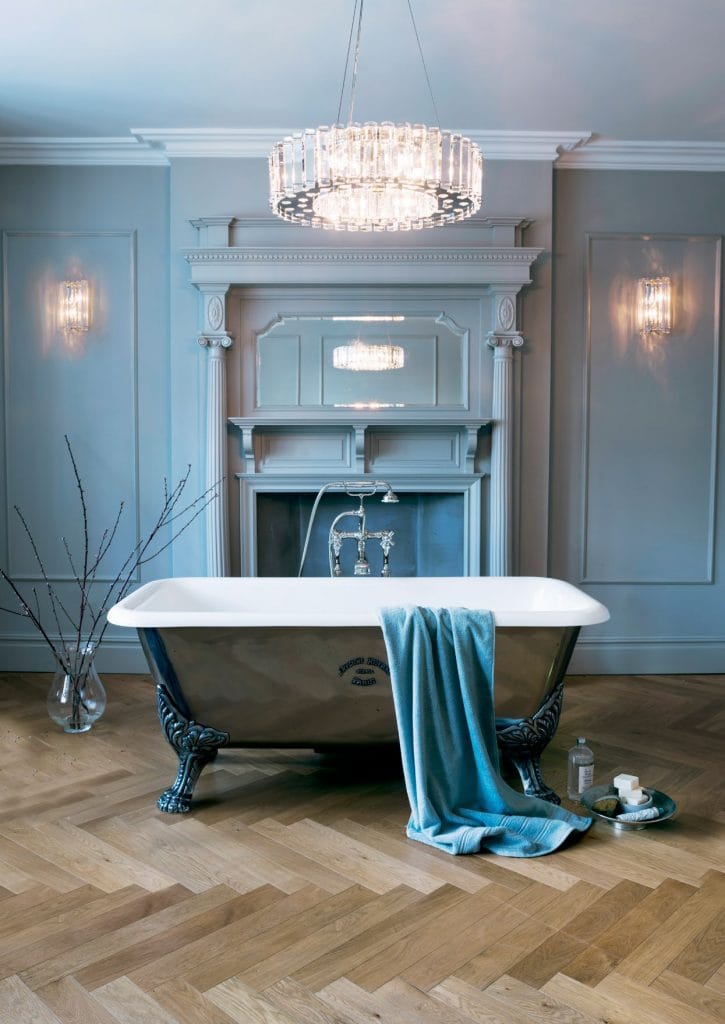
There are chandeliers suitable for bathroom use to add sparkle and elegance to an otherwise often disregarded room. Make your bathroom stand out from the rest with something more decorative.
Shop Bathroom Chandeliers
Bathroom Ceiling Light
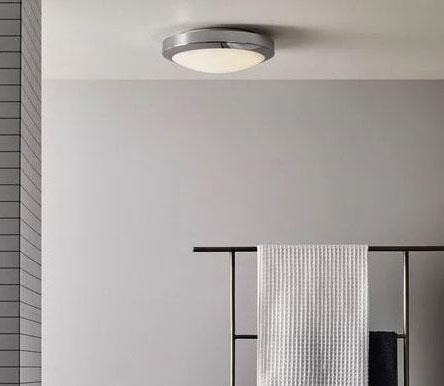

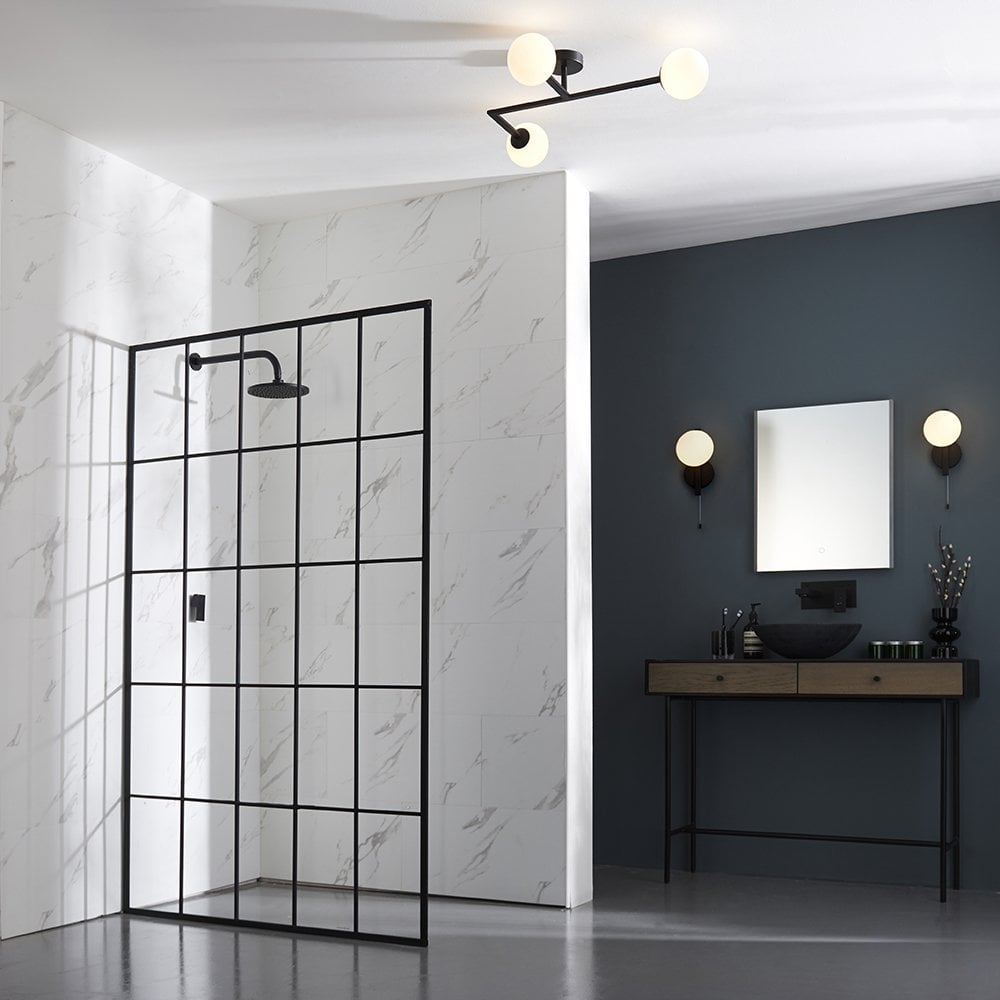
Flush fit and semi flush fit bathroom ceiling lights provide a general output of light and come in a variety of styles. Bathroom ceiling lights can be minimal or ornate so you’re sure to find a design of your liking. The provide a general source of light.
Shop Bathroom Ceiling Lights Modern
Shop Bathroom Ceiling Lights Traditional
Bathroom Spotlights


Bathroom spotlights come in various styles. Available as adjustable spotlight clusters or as fixed downward spotlights. These are great space saving forms of lighting which give a good directional form of bathroom lighting.
Shop Bathroom Spot Lights
Recessed Bathroom Lighting


Recessed bathroom spotlights are great choices for those with low ceiling heights. They are also a good option for those looking for a sleek modern appearance. Providing a good level of light these unobtrusive fittings can give a clean finish to the interior.
Shop Recessed ceiling Lights for Bathrooms
Bathroom Pendants

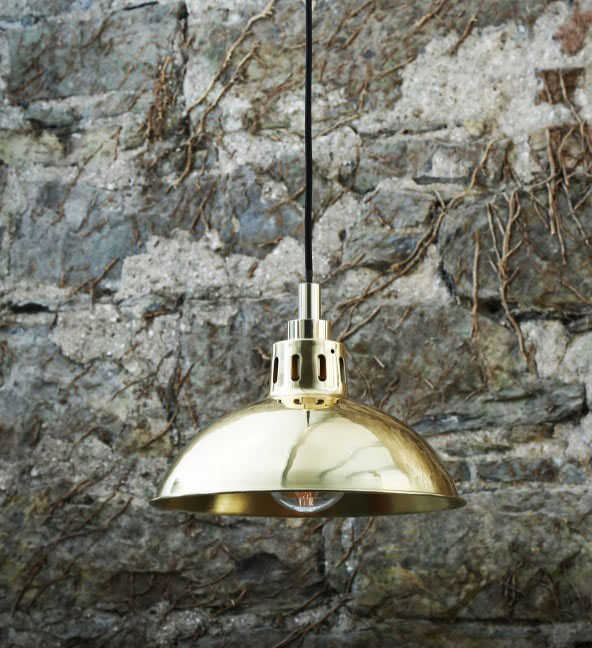
There are also ceiling pendants available for use in bathrooms. They come in various styles and are ideal for those with higher ceilings in their bathrooms because of the longer drop. Get a better concentration of light over the basin with a bathroom ceiling pendant.
Shop Bathroom Pendant Lights
Bathroom Wall Lights
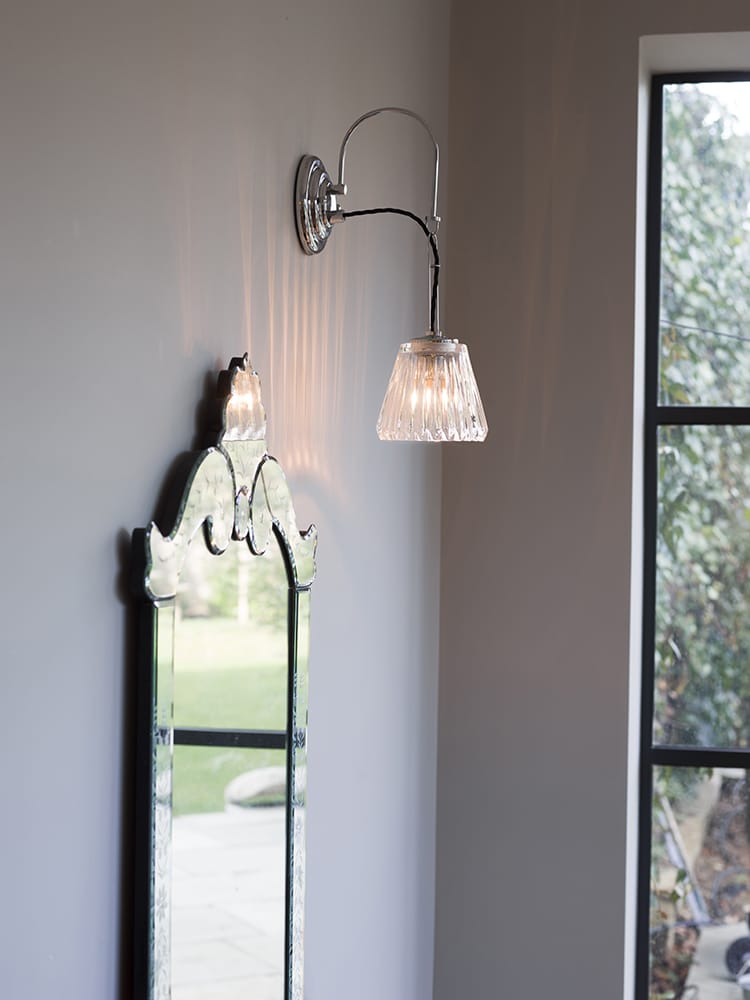

Bathroom wall lights are available in many different styles and are great choices for those with big bathrooms, or where ceiling lights are not an option. If you’re looking for a wall lights that’s individually switched there are many bathroom wall lights with pull cord switches available. This allows you to control the overall ambience by turning wall lights off separately to the main lighting.
Shop bathroom Wall Lights with switches
Illuminated Bathroom Mirrors
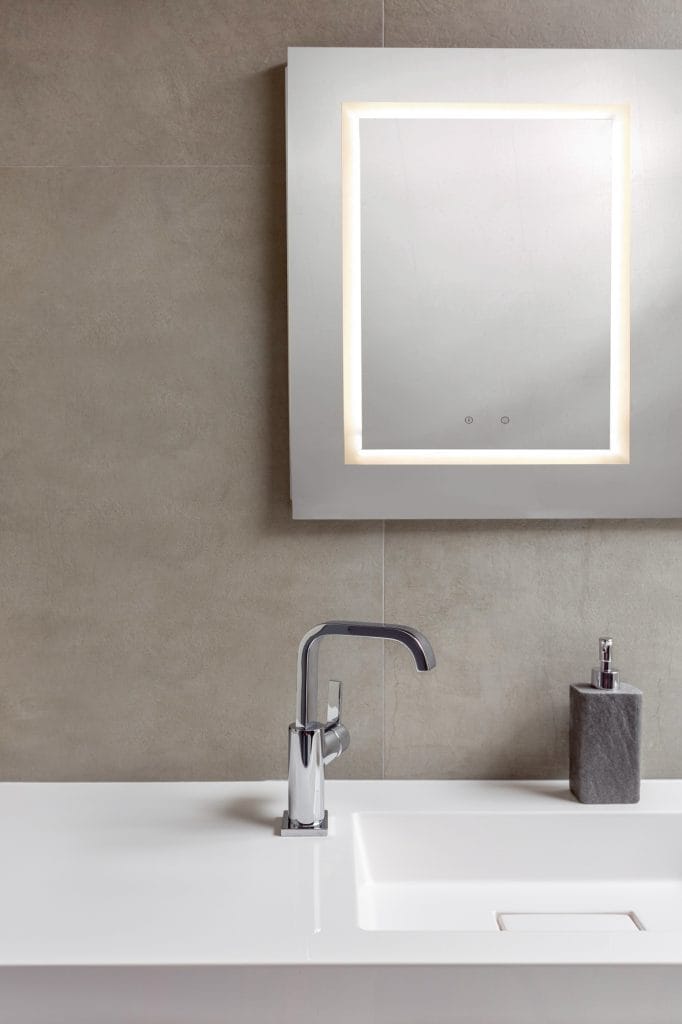
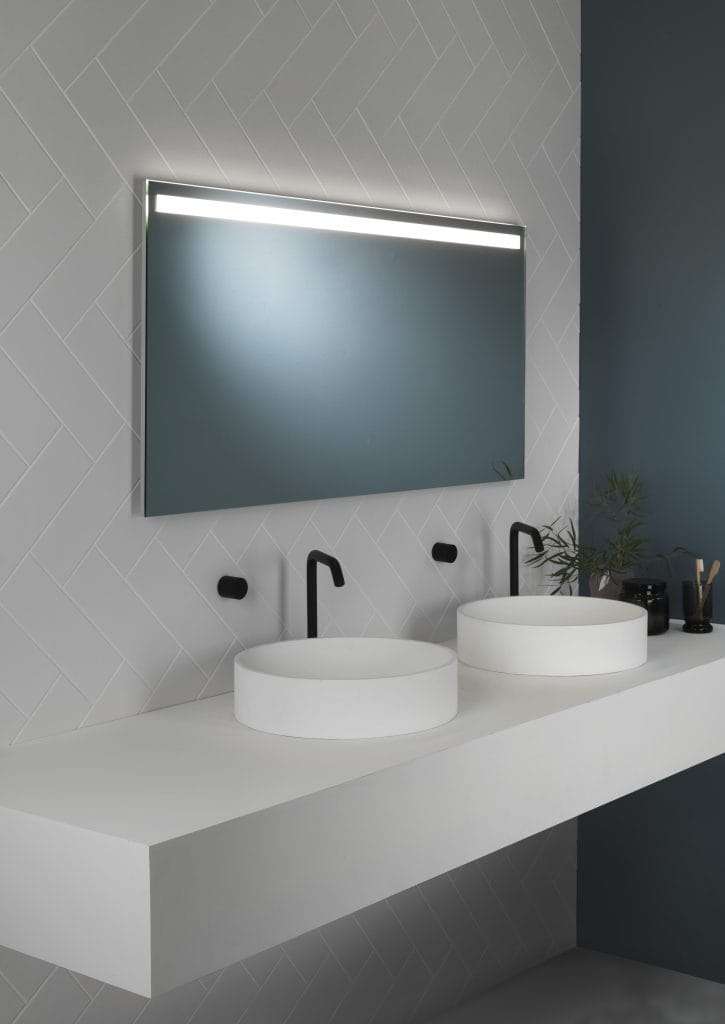
The vast majority of bathrooms find space to accommodate a mirror, so If you’re looking for a little extra light why not use a mirror with an inbuilt light source? Illuminated bathroom mirrors provide a functional light without the need of finding wall space for a fitting. If additional wall lights are not an option this is a perfect two for one option.
Shop Illuminated bathroom Mirrors
As the choice has narrow of late for lit mirrors many of us preferring to light from above or each side of a more decorative mirror, we have included a little extra information for those pondering where to position wall lights for the best effect when shaving or make-up application.

What Lights Work Best
- General ceiling lights – Choose flush or semi-flush IP44-rated fittings for even illumination. Consider Bathroom Pendant Lights or Chandeliers if the ceiling is high.
- Downlights & spotlights – Ideal for modern bathrooms, especially recessed or low-ceiling designs.
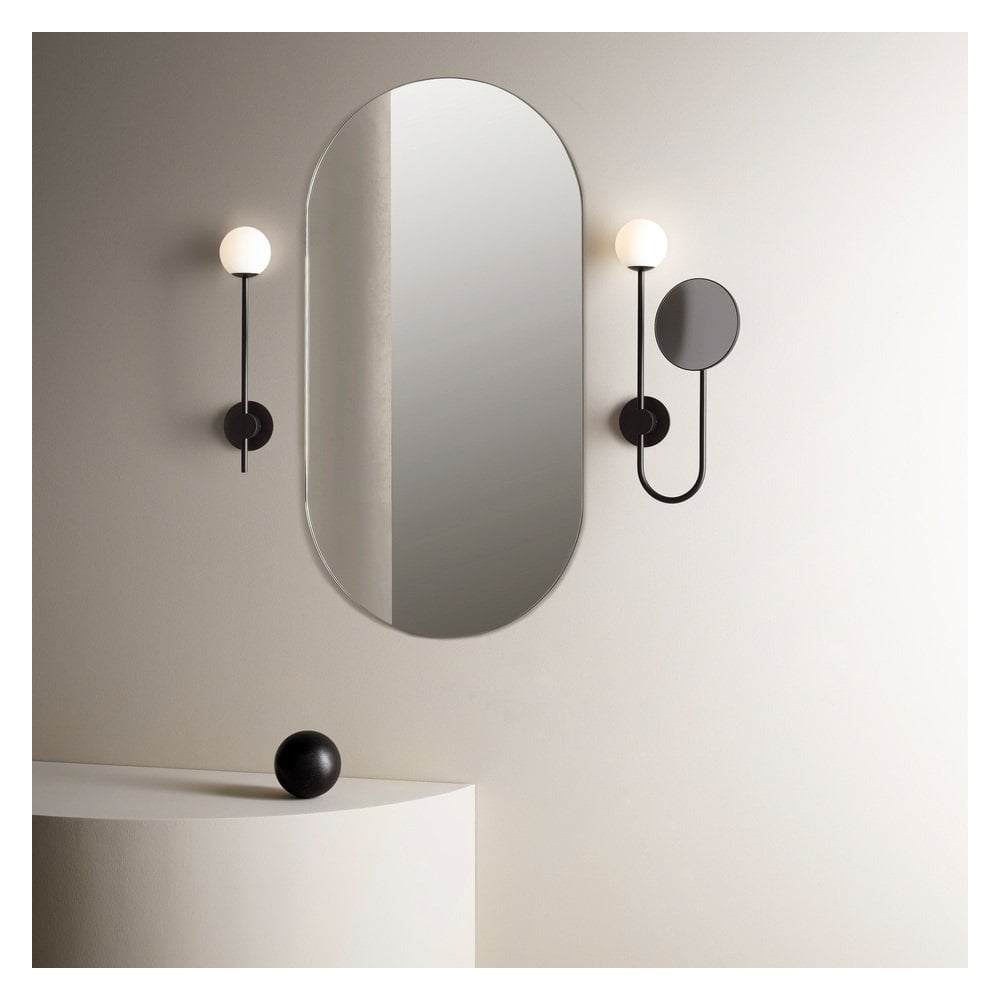
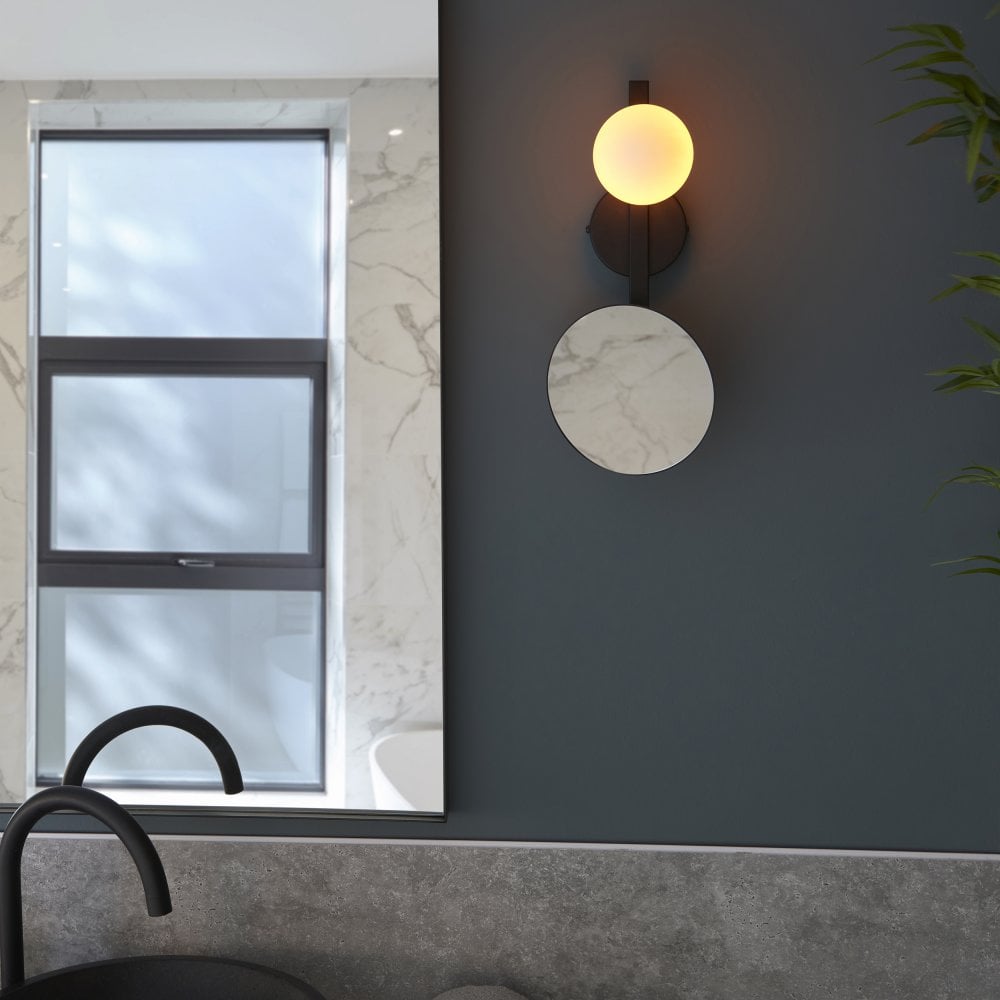
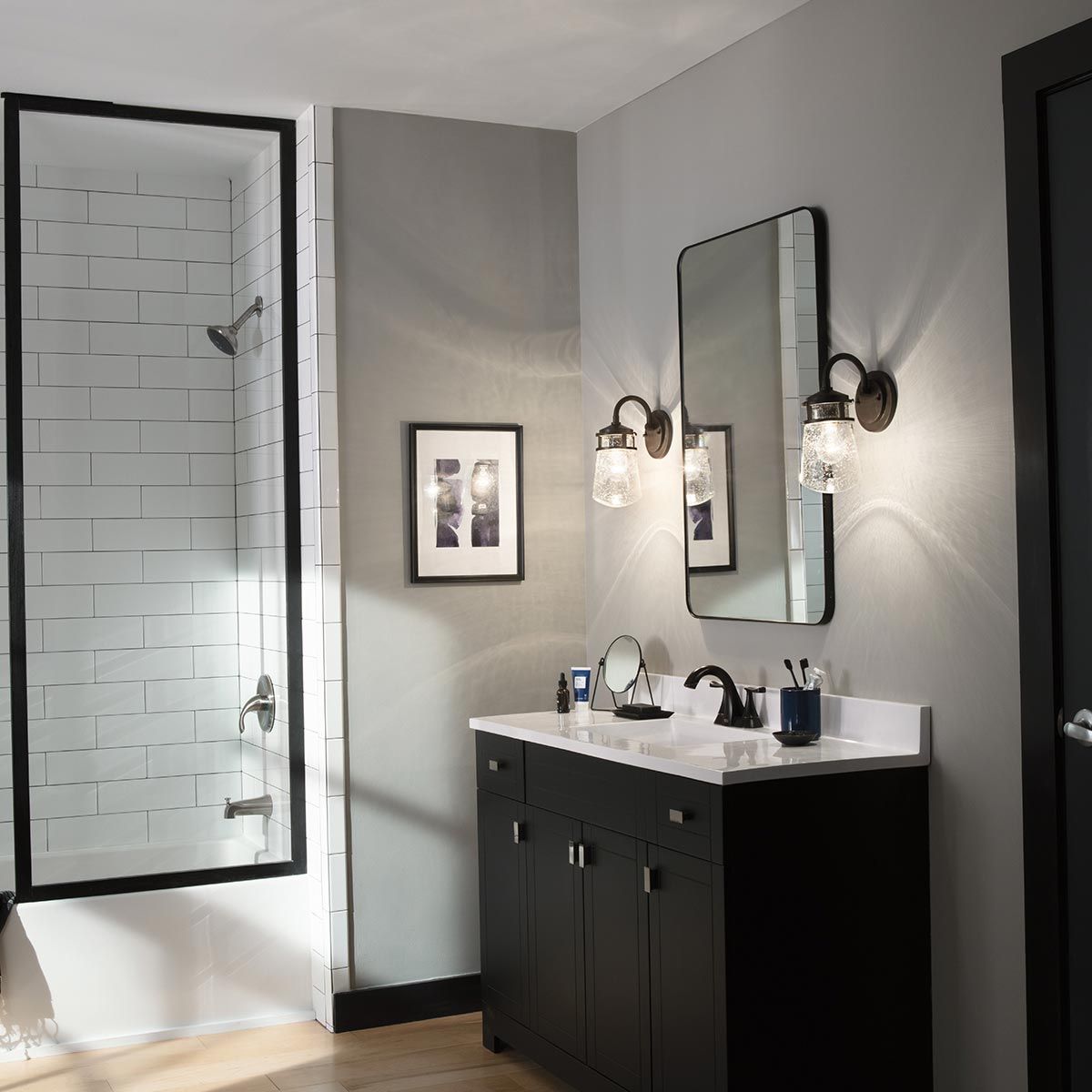
- Mirror & vanity lights – Position either side of the mirror (≥1 ft apart), directly above, or use an illuminated mirror.
- ➕ New tip: Select warm-white light bulbs 2700–3000 K LEDs to enhance skin tones and reduce glare.
- Decorative fixtures – Chandeliers, pendants, even industrial cage lights—if IP-rated, they elevate the look dramatically when hung next to a mirror.
Explore styles by visiting: Modern, Traditional, or Chandeliers sections.
Top Tips for Bathroom Lighting
- Ensure you have the right IP Rating for the chosen Bathroom Zone.
- Calculate how much light you need. Measure the room in metres and multiply the length by the width. Then multiply this number by 250. This will give you a total recommended amount of lumens needed to light this space.
- Use LED bulbs when applicable to ensure a high output of light.
- Paler colour palettes reflect light better so consider a lighter paint or tiling.
- Make mirrors well lit.
- Consider switched wall lights for control over ambience.
- Ensure sufficient light over counter tops.
- Between 2700K and 3000K (warm white) is usually the best colour temperature of light in a bathroom.
- Match Light Fixtures to Taps if possible