


How do you choose the right kitchen Lights?
One room that always requires bright lighting is the kitchen, but sadly for many of us, we just don’t know what style of light is suitable for a kitchen. Fear of making the wrong choice prevents many of us from improving the lighting even when we know we need to.


Do kitchen lights need to be waterproof?
How bright does a kitchen need to be?
What style of light fitting is best for a Kitchen?
What lighting is trendy for kitchens?
For anyone embarking on a kitchen makeover, there’s an abundance of questions and considerations and very little guidance that covers all aspects of Lighting a kitchen effectively. This short easy to understand guide, will tell you all you need to know for Lighting Kitchens UK wide.


Whilst we’ve already written a blog or two on this subject before, kitchen styles change over time. They’ve become larger and more open-plan which requires multiple options for practical and aesthetic reasons.
Kitchens are spaces where the room does need to be lit better than other rooms and taking a little time planning the lighting is well worth the investment at the planning stage. Firstly in terms of light fixtures, there is no wrong or right choices, you can safely use any style of light, however, you do need to take care where you position lights for safety reasons.
These 3 things are the most common mistakes made when lighting a kitchen avoid these 3 mistakes and your kitchen lighting will be safe. Positioning light fittings in kitchens is common sense, but on occasions, people are a little miss guided.
Three things you shouldn’t do when Lighting a kitchen.
1. Don’t put lights too close to the taps in kitchens.
You don’t want your new kitchen pendant lights dangling by the kitchen sink, they could be touched with wet hands and that would be dangerous install lighting high enough to avoid splashing.
2. Don’t hang glass Lights or bare bulbs above the hob.
Whilst it makes sense to be able to see what’s cooking. A well-lit cooking space is important but you’d be best to avoid installing light fixtures directly above. The lights could be damaged you’d be a risk of glass dropping into food. Lights shouldn’t be placed above a hob, save for built-in lights in an extractor or cooker hood.
3. Don’t have hanging Lights where a door can open onto it.
People often forget that doors take up extra space when opened, look at what clearance you have above the door when opened, and don’t forget to take into account the full radius or swing of the door and leave this space clear, or fit the lights close enough to the ceiling so the door can open fully below the fixture. This doesn’t just apply to doors, cupboards that are high up and fridges should also be considered when deciding where to place your lights.
Still, wondering where to position your new kitchen pendant light? Well, we have an excellent section on just that in our Definitive Guide to Ceiling Pendant Lights where we explain the best place to fit your new kitchen pendant.


Now you know the common pitfalls to avoid let’s get into the detail.
Lights fitted in kitchens don’t need to be waterproof by law in the UK. There is very little splashing and not as much steam as in bathrooms- though sometimes with every boiling pot on the hob at once it feels hot and steamy, it’s still not a requirement or warranted to have waterproof lighting.
Often people use bathroom lights in kitchens not because they need them to be IP rated, simply bathroom lights are generally practical, functional and fit with a minimalist modern decor. So yes if you like the look go for it!
What is (IP) Ingress Protection and Zoning? And why is it used for some light fixtures but not others? The rating is the degree of protection a light has against water getting into the electrical parts and causing electric shock. Needless to say, lighting that is installed in bathrooms where there may be splashing needs to meet high safety standards. These IP-rated lights can be installed anywhere in the home but have been tested and rated high enough to be safely installed in wet areas. Depending on how close to the water the light is being installed the higher the rating. Each zone or proximity to water has a different requirement for IP rating.


The is no current requirement to have IP-rated lights in kitchens. As long as the lighting is installed correctly by a competent person, all lights are safe for kitchens.
More About IP-Rating
If you are interested in learning more about IP rating ad zoning, please give our Definitive Guide to Bathroom Lighting where you will find a brilliant section explaining everything you need to know about IP ratings and Bathroom Zones.
There is so much choice for kitchen lights these days. Just looking at our website LightingCompany.co.uk we have over 7,000 options. Made up of kitchen ceiling lights, kitchen wall lights, kitchen spotlights and kitchen pendant lights, but if you have a big space you may also have space and requirement for table or floor lamp for your kitchen too! It’s no wonder people can get a little dazzled and bamboozled by the choice.

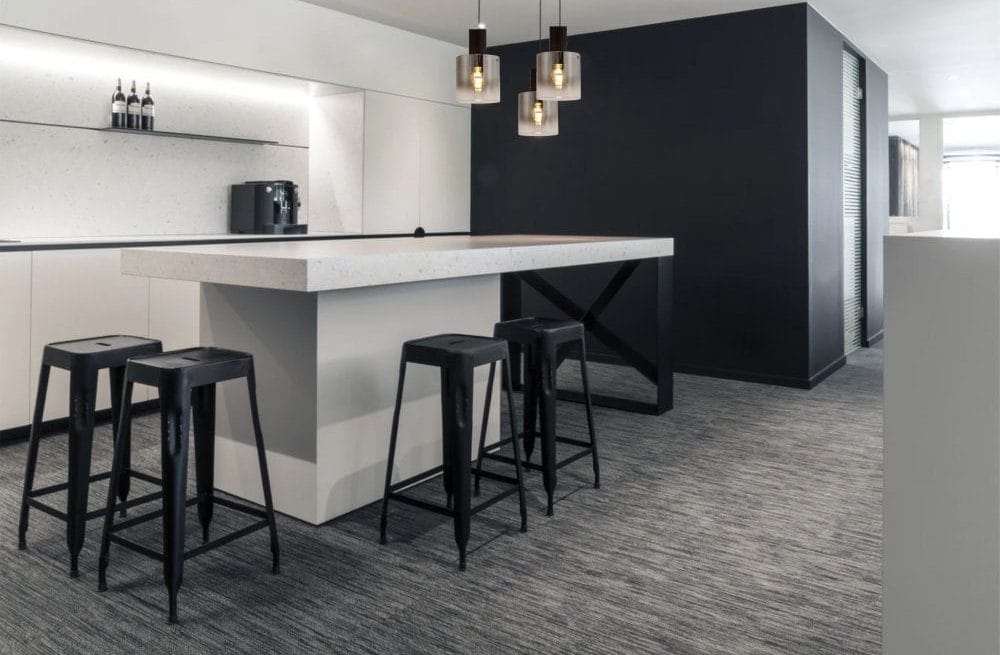
How bright should your kitchen lights be? And how do you know if they are bright enough before you’ve installed them?
Great questions! You’d be surprised to know that not everyone thinks of this, at this very moment I’m applauding you, you made a great start to having a lovely bright kitchen On a slight downer- there’s not really a very short answer.
What you are aiming for is the lighting to be bright enough for ‘you’ to prepare your food. Making a well-lit kitchen is a must it’s the engine room. You’ll be operating kitchen equipment, chopping, opening oven doors, getting steamed-up glasses, washing up, and cleaning. So many jobs or tasks take place in the heart of the home. Aside from that everyone’s eyesight varies bright to one is dull to another person.


A basic guide to how much light you’ll need in a kitchen.
Measure the size of the kitchen in meters times the length by the width to get the total square meters. Times this by 250 and the total is enough light in lumens to have a good general light for a kitchen. We’d suggest this measurement is of the ceiling rather than floor space as often cupboards take up floor space and you can feel the room is smaller than it actually is.

As mentioned this is only part of it, people even in the same household have a different idea of brightness. The colour of the kitchen, the shape of the kitchen and the material of the cupboards and worktops all affect the light you get.
Dark non-reflective materials soak light in, whilst lighter reflective glossy surfaces reflect light. If you choose a dark kitchen colour you will need to increase the amount of light to compensate.


Shadows
Shadows are formed in kitchens often when cupboards block light but even the occupants can block light inadvertently by standing in front of a light source. This is common especially when directional spotlights are used.
Directional spotlights for kitchens are super useful as you can angle the light to where it’s needed most. This practical application did see lots of people buy spotlight bars and spotlight clusters position them centrally and then immediately cause a shadow. If you do opt for spotlights it’s better to try and balance the light using two or 3 spotlight fixtures or rather than use the light directly pointing at the sink for example point it instead at something light or reflective to gain some indirect light.

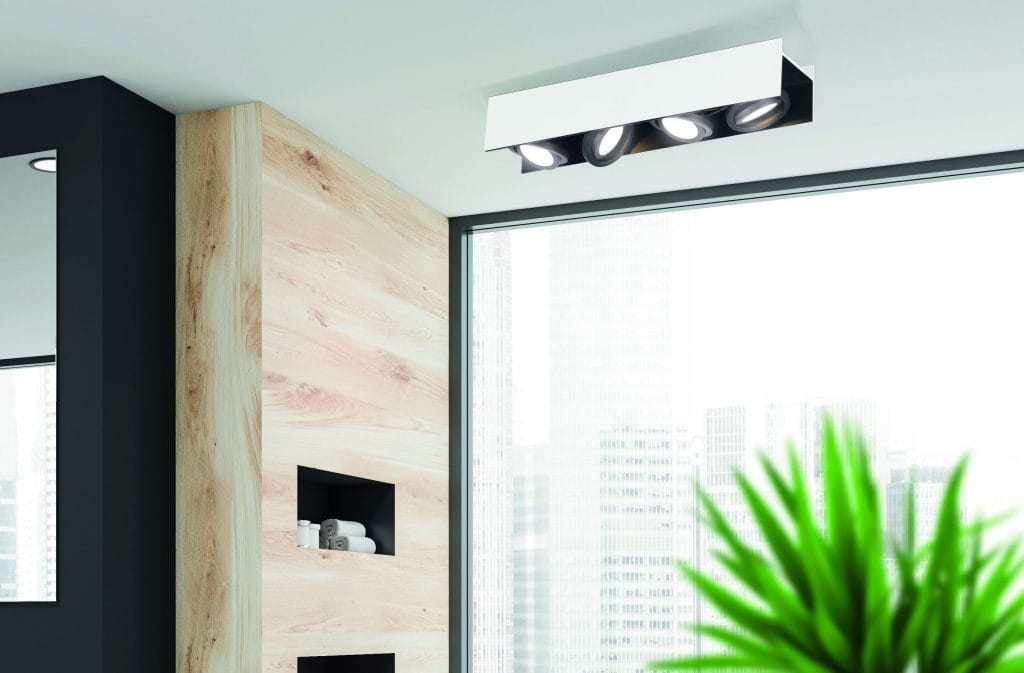
Direct light is when the light is cast directly at an object, indirect light reflects light from an object with the aim of maximising or diffusing the light.


We mentioned the layout of the kitchen affects the potential to create shadow, we’ve also mentioned direct and indirect light.
A picture is worth a thousand words.
Look at some scenes and hopefully one of these will be a similar shape to your kitchen we will try to replicate the effect from each type of light fixture.


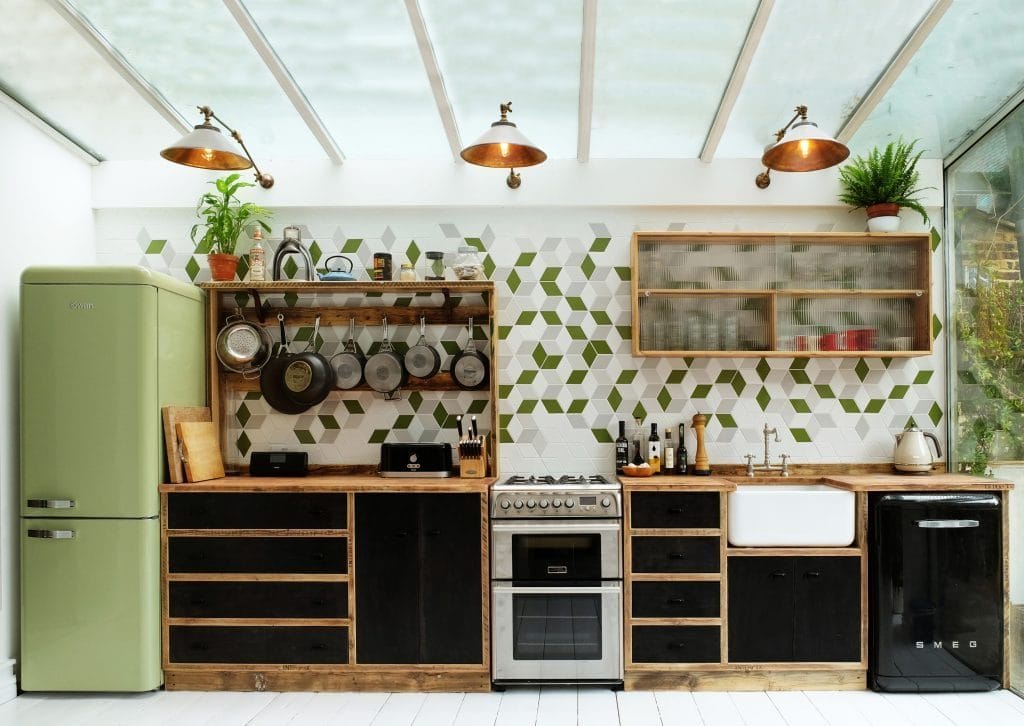


To sum this up, there is always a way to light even the most awkward-shaped kitchen, the darkest kitchen, the north-facing one, or small windowed kitchens. Don’t think any light will do, in fact, moreover, you’ll need more than one light fitting for a kitchen even a small kitchen.