

Lighting plays a major role in how a bedroom feels and functions. It is the room where we unwind at the end of the day, read in bed, get ready for the morning and create an atmosphere that feels calming and comfortable. Good bedroom lighting usually involves a balance of soft ambient light that sets a relaxed tone, focused task lighting for reading or grooming and accent lighting that adds warmth and depth.
But when the ceiling is sloped, these simple lighting needs become more complex. Angled surfaces affect how light spreads, shadows develop more quickly and certain fixtures cannot be positioned where you would normally place them. This often leaves people unsure how to create the same sense of comfort and practicality they rely on in a standard room.
This guide explores how to light a bedroom with a sloped ceiling in a way that still delivers all the essential functions of a modern bedroom while tackling the complexities that a slope ceiling brings.
For more in depth guidance on how to light a room with a sloped ceiling read our definitive guide.

Why Sloped Ceilings Need a Thoughtful Lighting Plan
Sloped ceilings are full of charm but they also change how light behaves. Light pools at the highest point, fades quickly toward the lower end of the pitch and creates sharper shadows around alcoves or beams. This is why lighting considerations for bedrooms with sloping ceilings must begin with understanding how the room’s shape influences brightness.
Attic and loft bedrooms often have low knee walls, irregular corners or structural beams. These features impact where fixtures can be installed and what types of lighting will work. Whether you are learning how to light an attic bedroom with sloped ceilings or a bedroom with a low sloping ceiling, success starts with layering.
Build Your Scheme Around Layered Lighting
Layered lighting creates depth and balance in any bedroom, but it is especially important in rooms with sloped ceilings. Instead of relying on one central light, use a mix of ambient, task and accent lighting to make the space feel comfortable and practical.

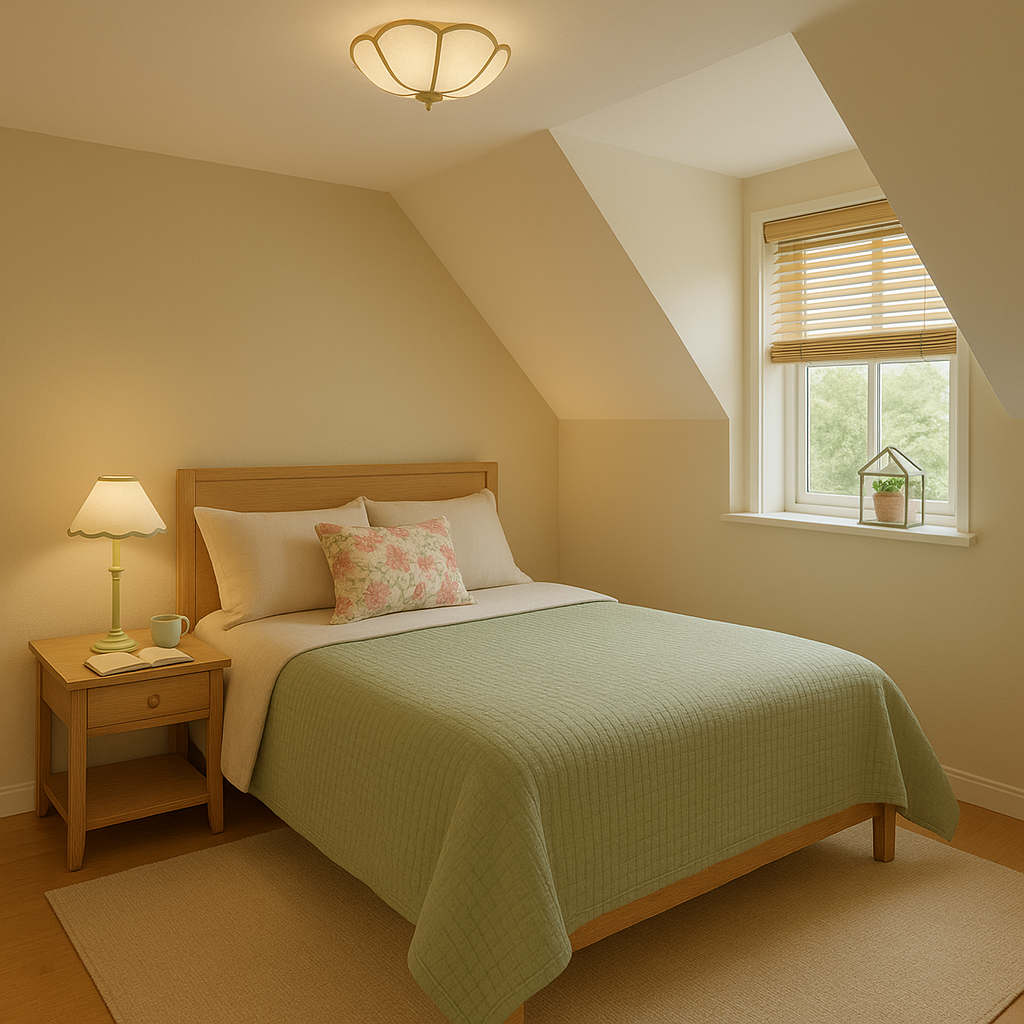
Ambient lighting
Ambient lighting provides the main glow that sets the tone for the room. In sloped ceiling bedrooms, ambient light often comes from spotlight bar lights following the slope, pendants hung at the highest point or wall lights that lift the central level of the room.
Task lighting
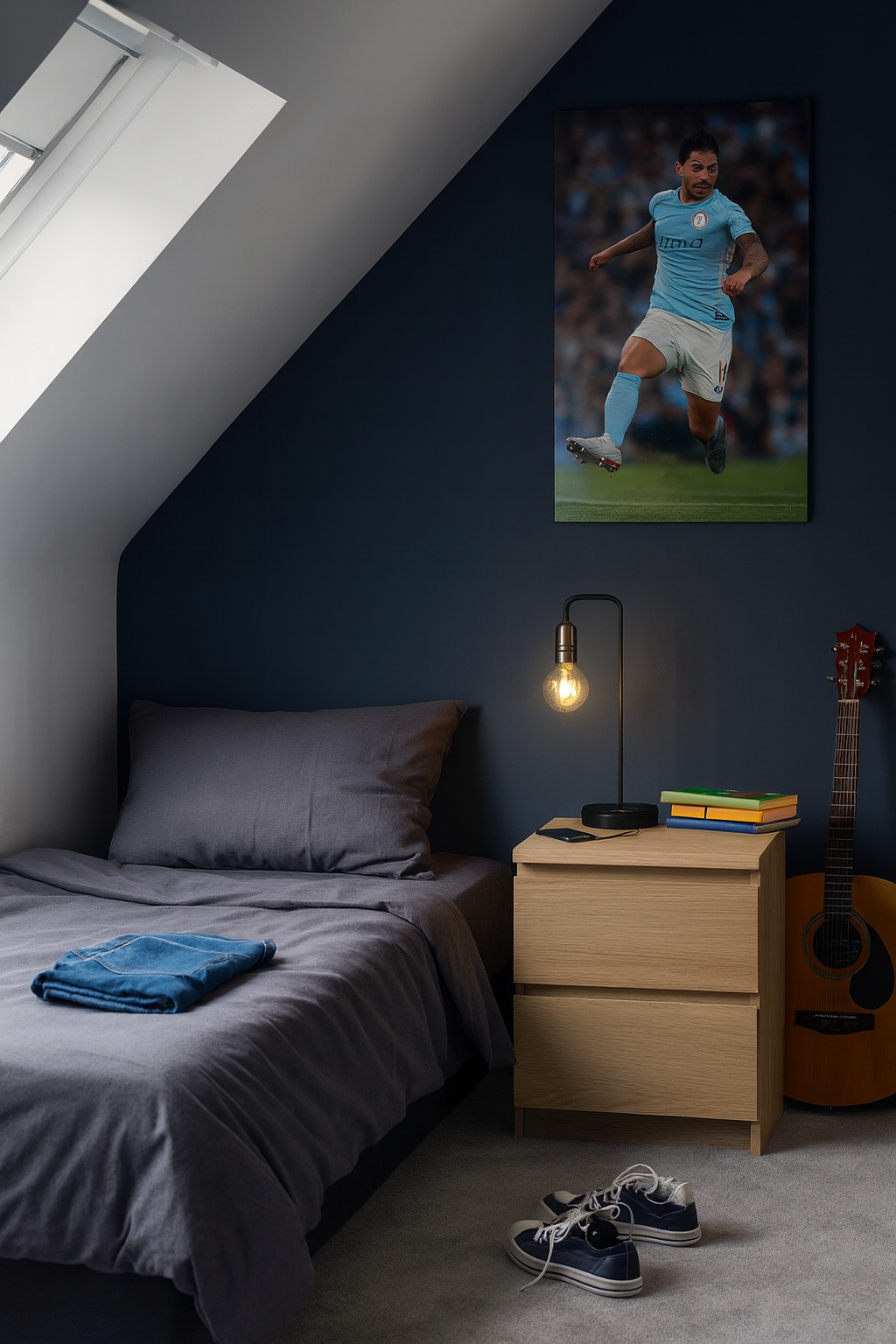
Task lighting supports reading, grooming, bedside use and dressing. Adjustable reading lights, small wall mounted lamps, table lamps with upward glow and lighting for vanity areas including mirror lights and picture lights ensure you can carry out everyday tasks comfortably. This is especially important when natural light is limited or uneven.
Accent lighting
Accent lighting via spot lights, LED strip lights and picture lights adds personality and softness by highlighting features and atmospheric zones. LED strips along beams, small directional spotlights grazing the ceiling or picture lights over artwork help build a cosy, layered bedroom.
This layered approach is one of the most effective lighting ideas for bedrooms with a sloping ceiling because it prevents shadows from dominating and makes the room feel welcoming throughout the day.

The Best Lighting Types for Sloped Ceilings
Not every light is suited to an angled ceiling, but many options work beautifully when chosen carefully.
Pendants
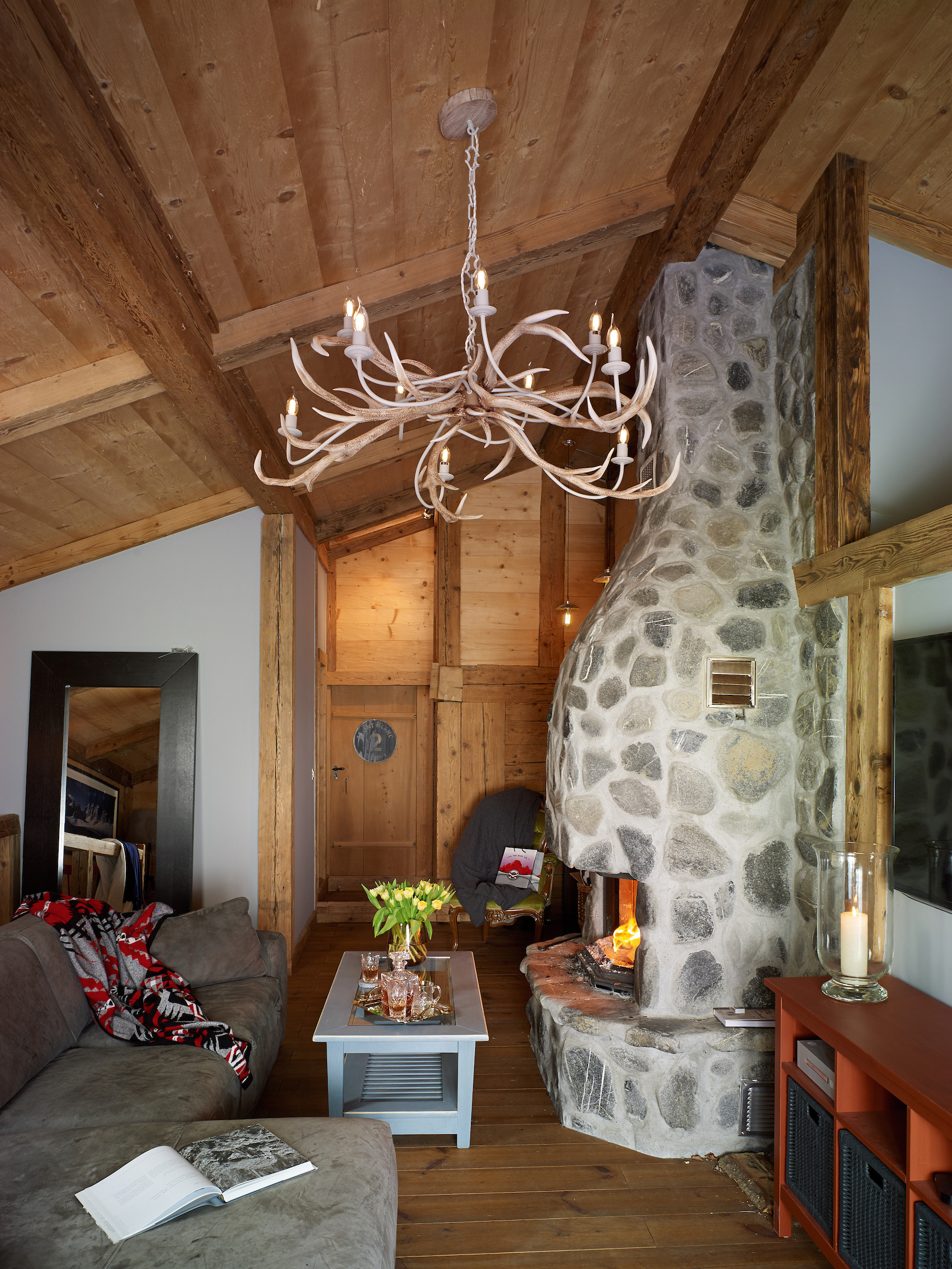
Pendants look striking when positioned at the highest point of a sloped ceiling. Use a pendant adapter so the light hangs straight and choose adjustable drops to suit the height. This approach works well when learning how to light a bedroom with a slanted ceiling while maintaining symmetry and proportion.
Track lighting
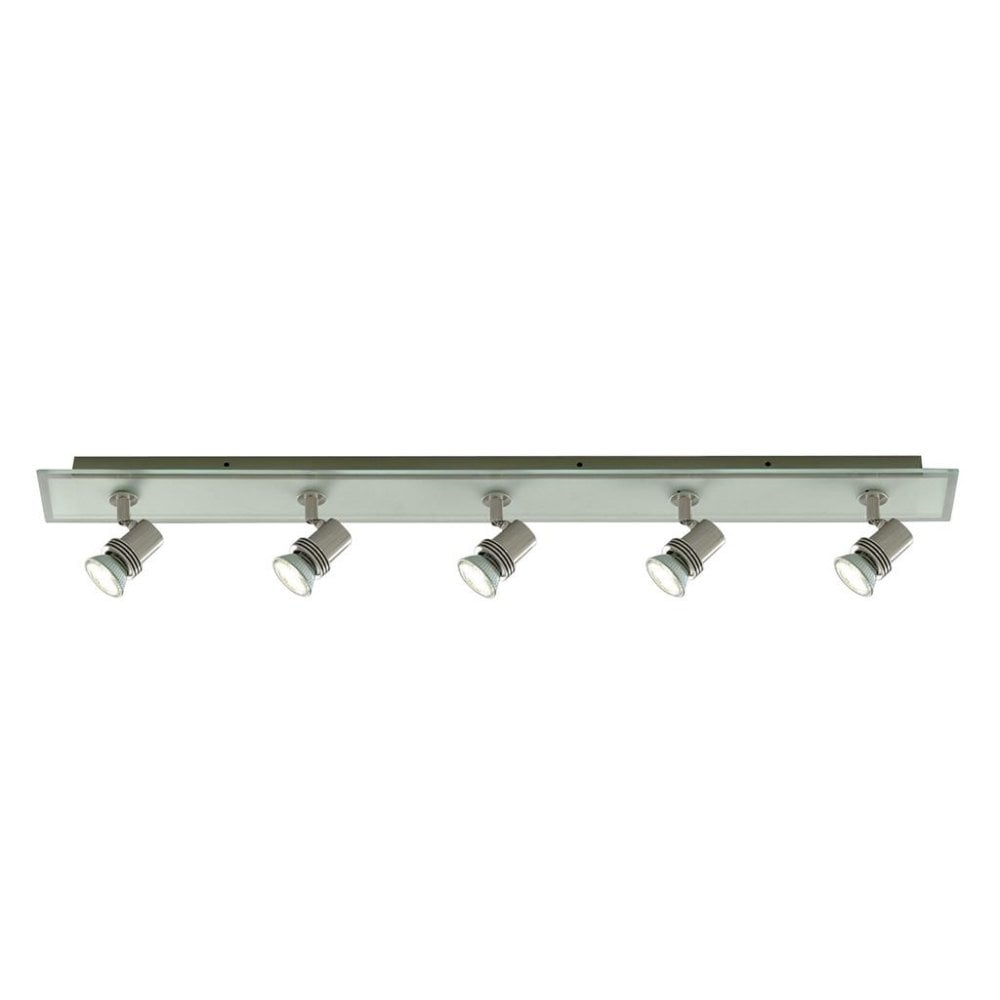
Track systems or longer bar spotlights are incredibly versatile and ideal for unconventional rooms. They can be installed along the slope and each head can be adjusted to direct light where needed. Track lighting is particularly effective in long loft bedrooms or awkward spaces.
Surface mounted spotlights
Directional spotlights help you illuminate darker corners or highlight feature walls. They also provide more control than recessed downlights and are useful for solving common issues when lighting a bedroom with a sloped ceiling such as patchy brightness.
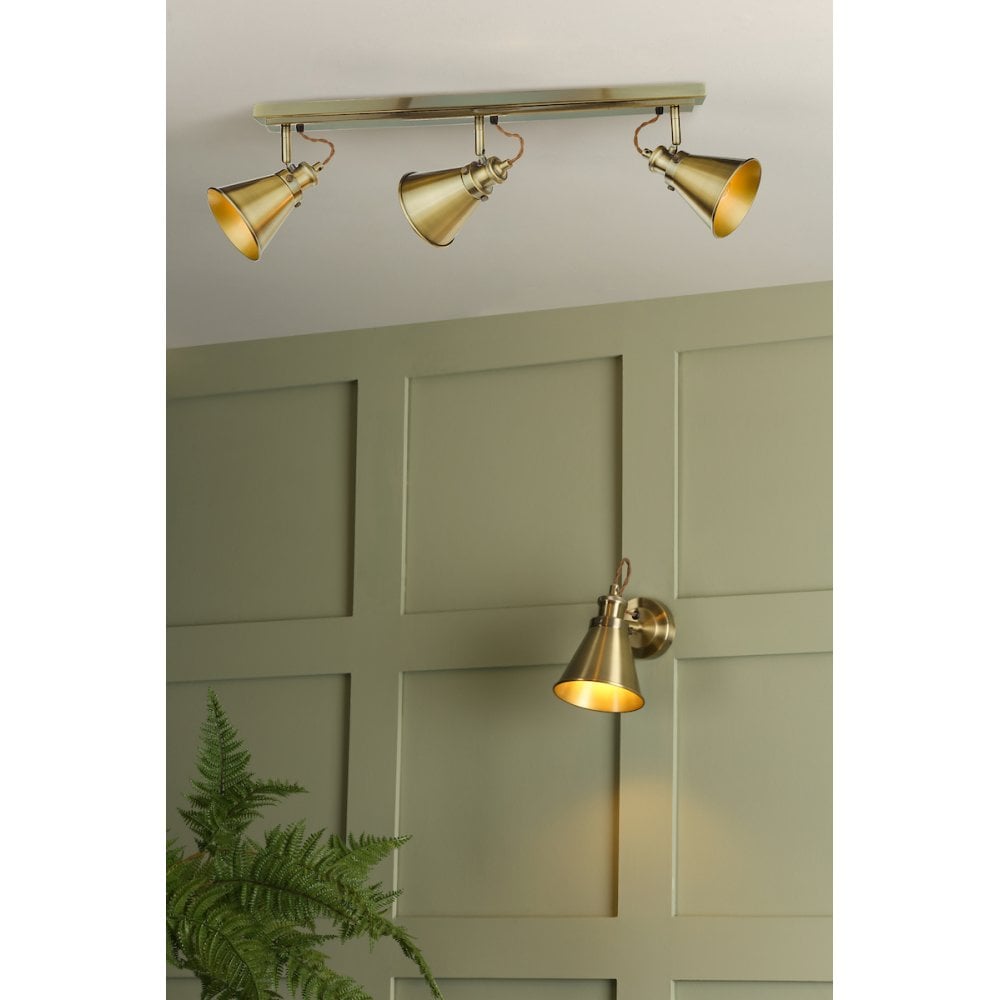
You can also angle light to where it’s needed
Wall lights
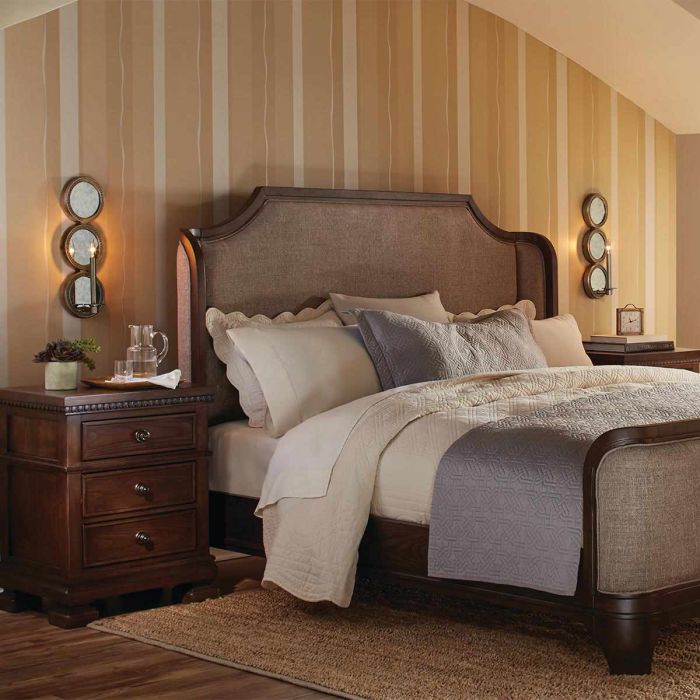
Wall lights are excellent alternatives to ceiling lights in rooms with steep pitches or low points. They help fill mid level shadows, create softness and offer practical bedside options where pendants or table lamps might not fit.
Lamps
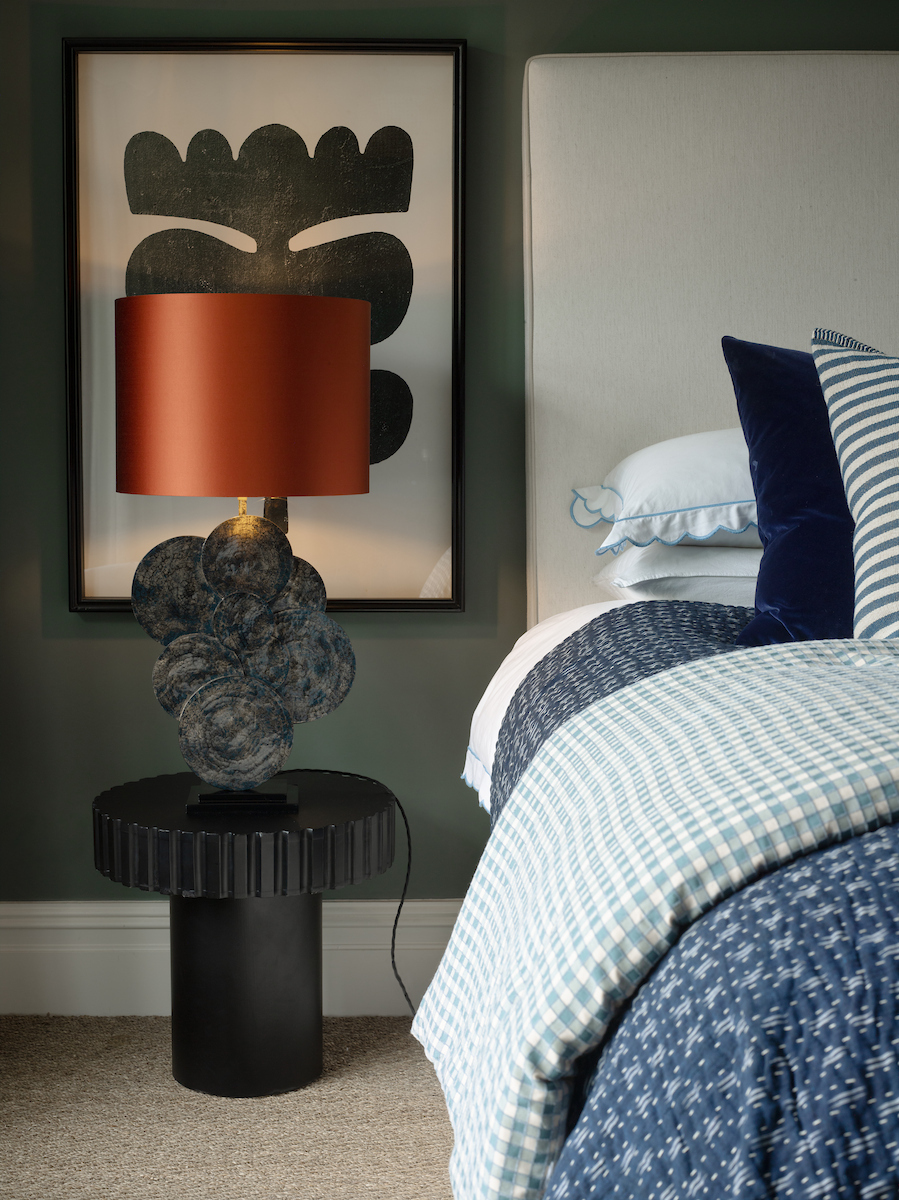
Table lamps and floor lamps add warmth and are ideal for rooms where ceiling lighting is limited. Tall lamps in lower parts of the slope can help spread light and soften the angles.
Why Recessed Spotlights Can Be Difficult on Sloped Ceilings
Recessed downlights often struggle on angled plasterboard because their beams skew, creating narrow pools of light and deep shadows at the edges. Recessing spotlighting is also not suited to the angle ceiling as a void is required behind for safety.
If you choose recessed fittings, opt for adjustable versions and space them so their beams overlap and use only on flat planes. For most sloped ceiling bedrooms , surface mounted or wall mounted lights offer a more flattering result.

How to Position Lighting to Eliminate Shadows
Shadowing is one of the biggest challenges when learning how to eliminate shadows when lighting a bedroom with a sloped ceiling. Shadows tend to build along the lower edges of the pitch, behind furniture and around beams. Here is how to avoid them:
- Combine ceiling lights with wall lighting to lift the whole room
- Angle spotlights toward walls for reflected, diffused light
- Use track lighting to spread light evenly along the slope
- Place bedside lighting on both sides for balance
- Soften contrast with warm white bulbs
These techniques work for any sloped ceiling bedroom, from loft conversions to home extensions.

Highlighting Beams and Architectural Features
Sloped ceilings often include beautiful beams or vaulted structures. These features are perfect for accent lighting. LED strips create warm silhouettes when tucked along beams. Upward facing wall lights add architectural drama. Small spotlights aimed upward can bring out the character of textured wood.
Making the Most of Natural Light
Natural light should sit alongside artificial lighting in your plan:
- Velux windows – Velux windows provide bright, overhead daylight. Balance this by adding ambient light on the opposite side of the room during darker hours.
- Dormer windows – Dormers create charming alcoves but can become shadowed. A small wall light or tall lamp adds warmth and helps the space feel intentional.
- Feature glass walls – Large glazed sections bring in beautiful daylight. After dark, pair them with uplights or wide spreading wall lights to maintain an open feel.
Scale, Proportion and Ceiling Height
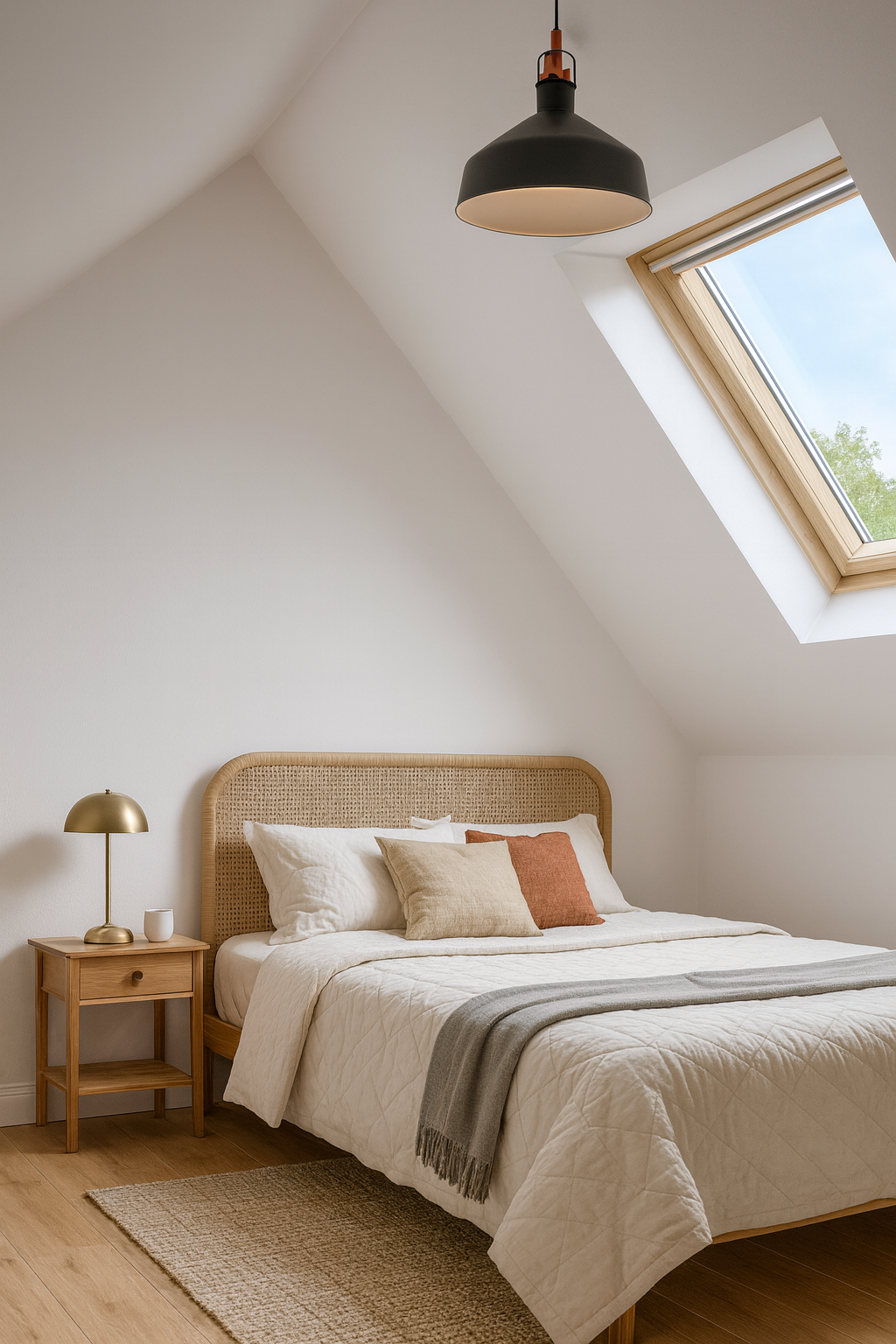
Small attic bedrooms benefit from compact fixtures, slimline tracks and neat wall lights. Larger vaulted rooms can handle statement pendants, multiple circuits and wider light beams. Always consider head height when adding pendants or taller fittings. This is especially important when exploring how to light a bedroom with a low sloping ceiling.


Bedside Lighting in a Sloped Ceiling Bedroom
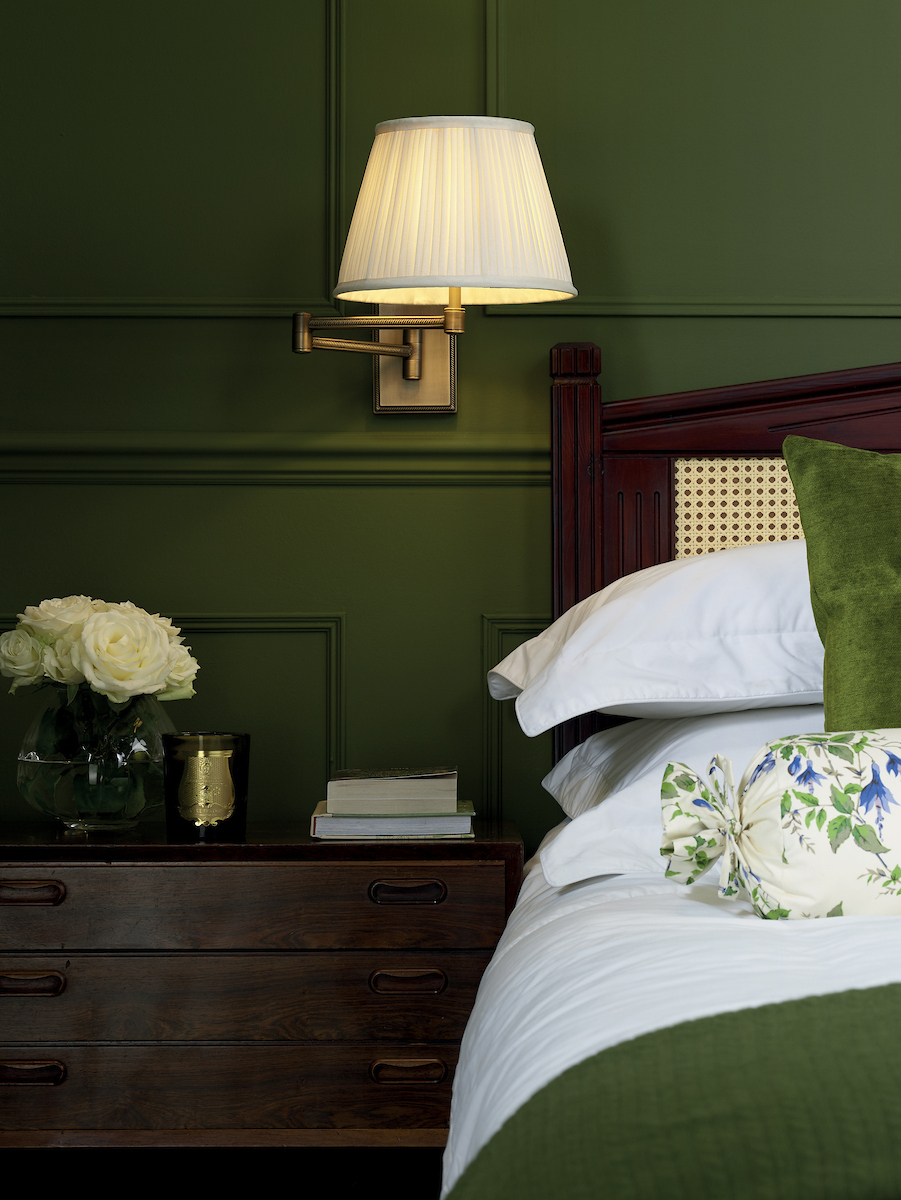
Bedside lighting is essential for reading, winding down and creating symmetry. Swing arm wall lights or angled reading lamps work well where sloped ceilings restrict pendant drops. Table lamps with upward glow help soften the angles and distribute light evenly around the bed.
Final Thoughts on Lighting a Bedroom with a Sloped Ceiling
Learning how to light a bedroom with a sloped ceiling is about working with the architecture rather than against it. With layered lighting, smart fixture choices, attention to natural light and a layout that reduces shadow, even the most unconventional room can feel calm, balanced and deeply relaxing.
Further Inspiration
For lighting inspiration, explore our blog and read more of our helpful articles on how to light a bedroom with a sloped ceiling.
And don’t forget to share your lighting story with us on social media – search for Lighting Company on Instagram and Pintrest.