
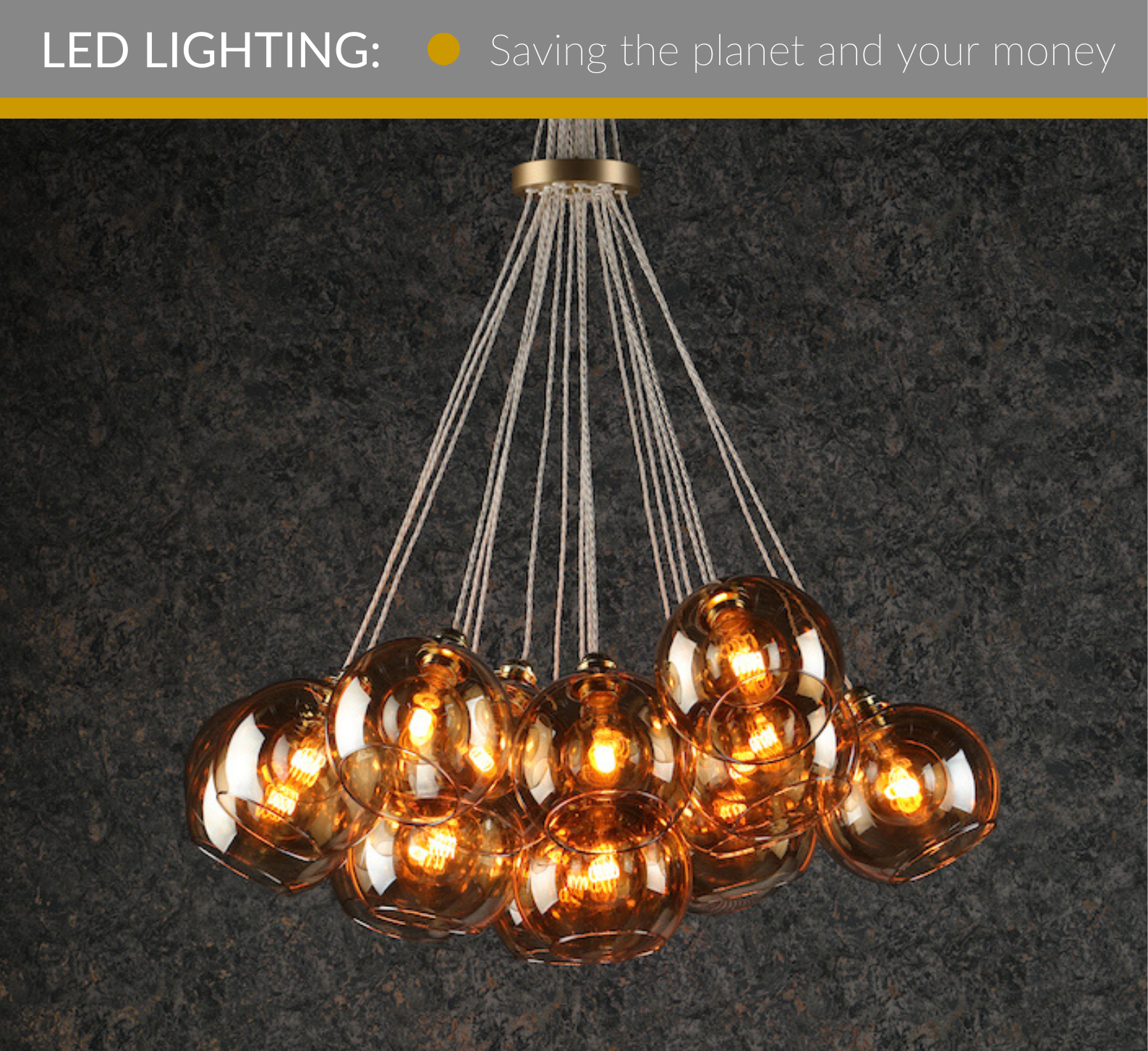
More and more homes in the UK are switching to LED bulbs and for good reason.
The rate at which the technology in LED is advancing is amazing. Considering past bulbs, CFL and Incandescent, were prone to shattering, using 90% of their energy in heat as well as containing harmful chemicals, LED have flipped the switch in Eco friendly lighting solutions.
We at The Lighting Company have fallen in love with LEDs and we’re going to dive into why you should make the switch too.
What are LED lightbulbs?
Light-emitting Diodes, invented in 1963, or LEDs, are best known for their usage as colour changing strips in bedrooms. LEDs use a semiconductor to convert electricity into light, this is a massive step forward in cleaner and cost effective energy. LED bulbs produce the same amount of light as more traditional bulbs while using less Energy, a major difference between LED, CFL and Incandescent is the amount of heat produced from each bulb.
Did you know that the New Years Eve Ball that drops in New York is made up of 32,256 individual LEDs?
What are the Advantages of LEDs?
Incandescent wastes 90% of the energy that it produces in creating heat, consequently leaving only 10% of to generate light.
An LED has a higher Lumen to Watt ratio, for example a 5W LED will produce the same amount of light as a 40W filament bulb. Thanks to the reduced production of heat of a LED, an LED has a longer lifespan than any other bulb.
An LED can last over 20 years, while CFL bulbs last 12 years and Incandescent bulbs only a year. You’ll only have to recycle and replace a bulb once every 20 years, reducing your wastage and saving you money on buying new bulbs.
LEDs don’t burn out the same way that Fluorescent and Incandescent lights do. LEDs experience ‘Lumen Depreciation’, where the LED dims over time, but this process takes decades. For every 5 Fluorescent or 30 Incandescent lights only 1 LED will need to be thrown away. And if we haven’t already convinced you, LEDs are 95% recyclable and unshatterable. Crafted with no harmful materials like mercury, which are often found in traditional bulbs, leading older bulbs to be sent to landfill if not recycled properly.
LED bulbs significantly reduce your carbon footprint.
Did you know that you can increase your productivity by tuning the colour of light that the LED gives out to reduce eyestrain, increasing energy levels among workers?
How LED can reduce your Energy Bill.
Sometimes you have to spend a little to save a lot.
If every house in the UK changed one bulb to LED it would be the equivalent of planting 400,000 trees. The energy saved from the switch alone could light up 3,000,000 homes for a year.
With the rise of energy costs, you should know that 20% of all the world’s energy usage is in lighting, but if all bulbs were changed to LED, this would reduce to 4%.
If you’re living in a new build in the UK, it’s most likely that you’re already using LEDs. All new residential developments are required to have at least 75% energy efficient lighting. In its lifetime of 1 LED, that will save you over 160 pounds a year. If you look at how many lights are in your home, it starts to add up.
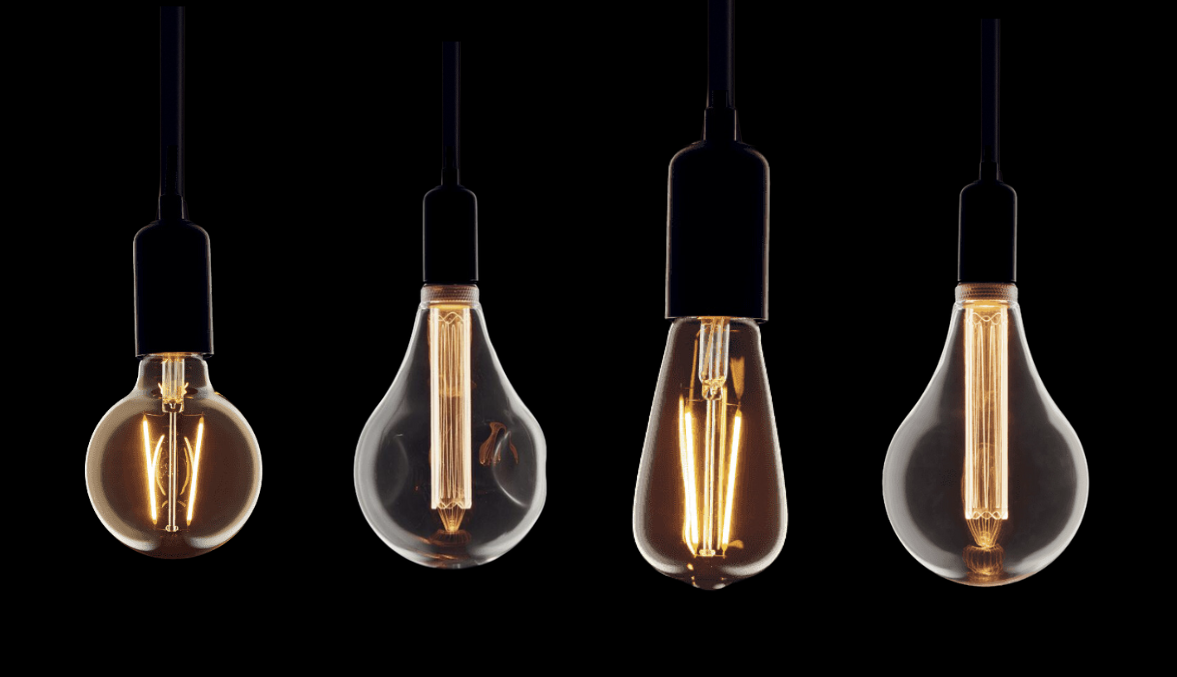
There’s no need to swap efficiency for style, however. Bare bulbs are in! From Edison’s first light bulb to Modern Contemporary styles, The Lighting Company knows that aesthetics are just as important as lighting your space.
Whether you’re an eccentric designer or a vintage lover, there’s something for everyone. From indoor to outdoor bulbs, you can save your pennies to make your pounds.
Tailoring LEDs to your space.
LEDs come in a wide range of colours, LEDs can suit the mood lighting for every room, from Bright White to Mellow Yellow. Colour temperature is measured in Kelvin (K). Kelvin is used because scientists needed a temperature scale where zero signifies the total absence of thermal energy rather than Celsius in where zero relates to the freezing point of water.

5600k + gives off a Cool and Crisp ambience. Perfect for Task Lighting, Home office, Basement, Garage and Outdoor security.
3500k-4500k has a Warm and Comfy feeling. Ideal for Vanity Lighting, Ceiling fixtures, Entryways, Hallways, Bathrooms and Kitchens.
2700K – 3000k is perfect for a Cozy and Inviting atmosphere. Looks best in Living spaces + Bedrooms, Dining Room and Family Rooms.
These choices can be overwhelming, so to take out the work, we offer Bulb Suggestions perfect for your fixture when you click Checkout on our Site.

There’s no need to worry about installation on your switch! There is a direct replacement for each of the more traditional bulb. As long as you buy the right fitting, the LED will fit into any socket. But be careful, if you have a dimmer switch and don’t use an LED dimming bulb, you could blow the bulb!
Look out for signs on your bulb like flickering, you may not have installed it properly, or it could be faulty.
Did you know that LEDs are less likely to attract bugs? Most LEDs don’t give off Ultraviolet light, which bugs are attracted to.
LED is the future of lightbulb engineering, proven by lower energy bills together with saving the planet with their green manufacturing. The rate at which the technology for LED is advancing, we expect to see leaps and bounds in the optimisation of these bulbs.
Explore our full range of LED lights here. If you need help choosing the perfect bulb to fit your space, give our helpful team a call on 01643 707 505 or fill out our contact form here.
LED FAQs.
Do LED lights get hot?
LED bulbs do generate heat, yet a heat sink located in the bulb’s base effectively draws away the heat. Subsequently, the heat disperses into the surrounding air, allowing the LED bulb to remain cool and prolonging lifespan.
LEDs are crafted to endure temperatures up to 85°C; exceeding this threshold could adversely impact their overall lifespan.
Do LED lights raise the electricity bill?
Led lights won’t raise the electricity bill. In the lifetime of 1 LED will save you over 160 pounds a year. If you look at how many lights are in your home, in due time, it starts to add up.
What does Lumens mean?
Past bulbs were measured in watts, being that Watts is actually the measurement of power. When energy saving bulbs were introduced, watts became less useful because they use less energy for the same light. Light output is now measured in Lumen. Higher Lumen = Brighter Light.
What does Lumen Depreciation mean?
This refers to where the Lumen output diminishes throughout its lifespan, influenced by operating temperature, hourly usage, and dirt. Typically, LEDs perform optimally in colder temperatures, contributing to an extended LED lifespan.
How long do LEDs last?
On average, an LED can last over 20 years, while CFL bulbs last 12 years and Incandescent bulbs only a year.
Can LED lights be used outdoors?
There are LEDs that are made for outdoor use, the appropriate bulb can get wet while classic indoor bulbs cannot.
Can LEDs be used for dimmers?
Not all LEDs are dimmable, but there are LEDs that can be used with dimmer switches. If you try to dim a non-dimmable LED, it may flicker and damage the bulb. Compatible LED bulbs are marked on the site as well as the boxes to avoid blowing the bulb via misuse. It’s important to note that LEDs will also flicker if they aren’t screwed in properly.
Why are LEDs more expensive?
LEDs are more complex in design, with limited heat exertion, hence longer lifespan and eco-friendly materials, the cost to produce these bulbs is more. However, in the lifetime of 1 LED, that will save you over 160 pounds a year in comparison to Incandescent.
Where can I see The Lighting Company’s Light Bulbs?
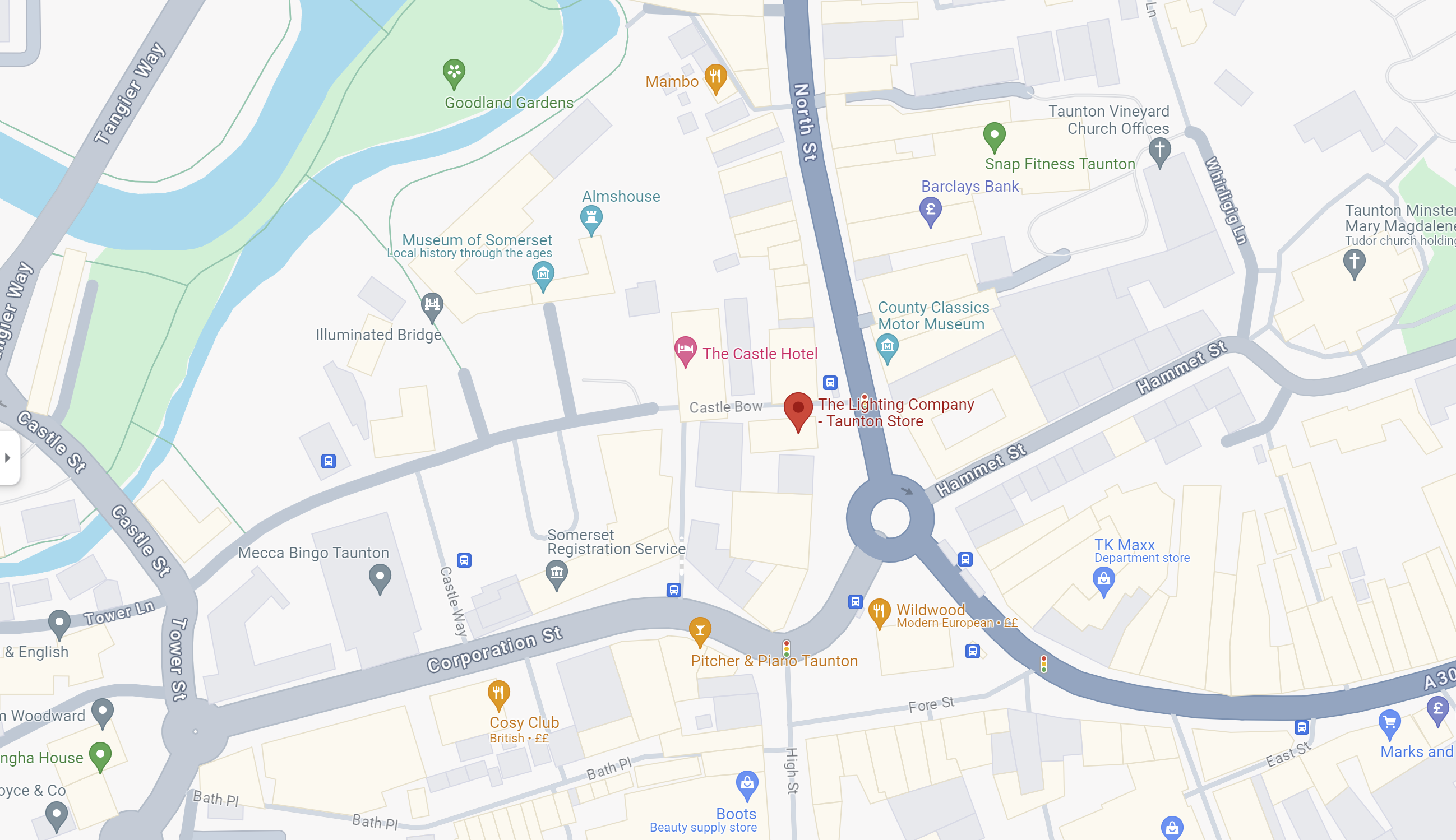
You can find our collection of lightbulbs on our site here as well as visiting our Taunton Store where our expert staff can answer any of your questions!
I have a question not answered here.
For advice and sales please call 01643 707 505, fill out our Contact Form or pop into our Taunton Store!