

Moving home is said to be one of the most stressful times in our lives. You can combat this stress by remembering the reason why you wanted to move. Remind yourself it’ll be worth it. Embrace the opportunity to declutter and re-evaluate the spaces that we inhabit. Follow our guide on lighting for your new home.
When you move into a new home, if you can, take some time to make a lighting plan before you start any major decorating. Get to know your new home and understand the light levels. You won’t instantly know all of its quirks. Take a little time and pay attention to the natural light and how it filters into your new home at different times of the day. This should give you the best success.
Daylight constantly changes and moves around your home, so planning your light at dusk is what we’d recommend. You will start to see plays of shadow and light. When you’re happy with the room layout, you can begin to plan and banish the shadows for a beautifully lit home.
You will need to think about how you will use each space and like most homes, it will have different needs for each member of the household. Is it a living room, playroom or home office? As you wouldn’t want an overly brightly lit room you don’t want a dimly lit space. Think about layering light, and playing with light and shadow, this can be much more dynamic and interesting.
Read on for our top lighting tips for each room in your home.
Living Room
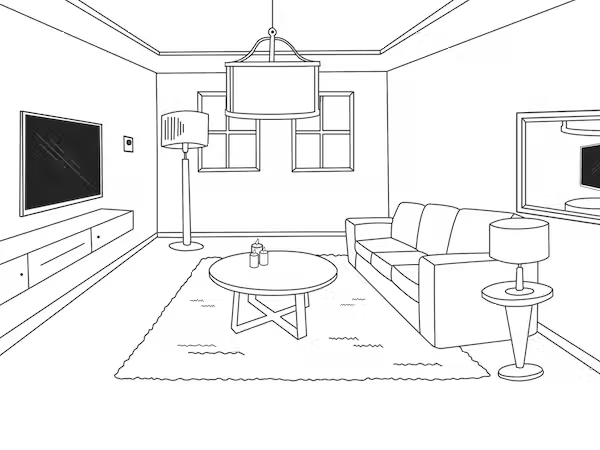
Top tips on how to light a living room:
- Use lighting by windows, so when natural light fades, you still have the light from the direction that you need it.
- Use multi-layers of light. For example, a mixture of ceiling lights, wall lights, picture lights, spotlights, floor lamps and table lamps.
- Use a dimmer switch on your ceiling light, so you can adjust the light level accordingly.
- Place floor lamps in front of mirrors to double the effect of the light.
- Avoid lights that will reflect off of the TV screen.


Kitchen
What are the best ways to light up a kitchen? Like the food created; your lighting needs to be balanced!
- Recessed lights look great; but if you don’t want to re-plaster, consider surface-mounted spotlights. Alternatively, try spotlight plates and bars.
- Use easy-to-clean lighting in your kitchen as it can attract dirt and grime from all the cooking.
- Ensure that you have enough light in your preparation areas.
- Under counter, lighting can both be practical and create a beautiful effect as can plinth or kickboard lights.
- Consider a dimmer switch for lights over any eating areas to create a more relaxed vibe.
Dining Room
Illuminating your dining space:
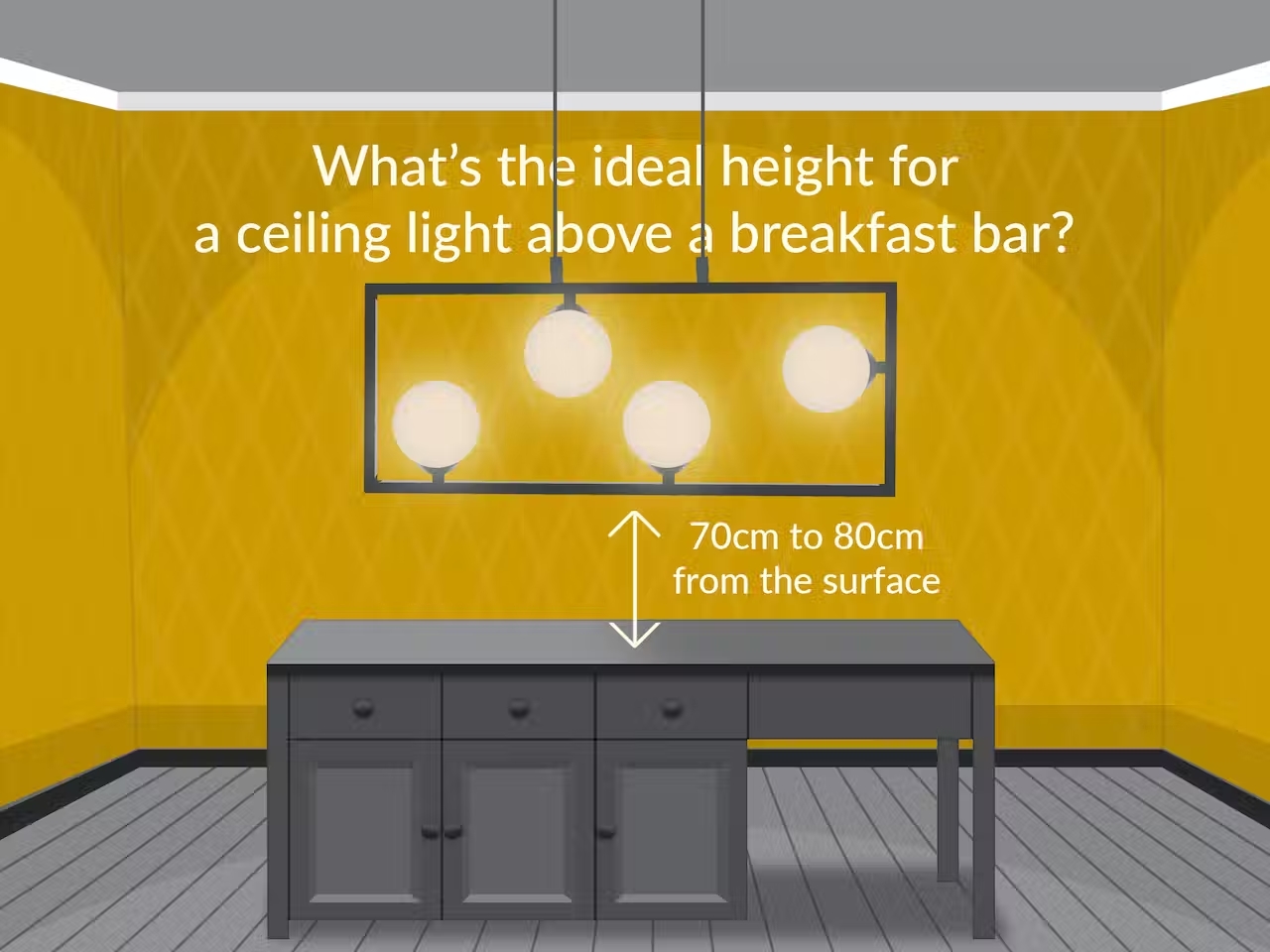
- Position your ceiling lights directly over your dining table.
- Mirror the shape of your table; use a row of pendants or a pendant bar over linear tables and round or cluster fixtures over circular tables.
- Use a single pendant over smaller tables.
- Use a dimmer switch to help create an atmosphere!

Home Office
If you’re one of the many UK workforces that now work from home, you’ll know all about the challenges of setting up a designated workspace. We’ve got some top tips about how to get comfortable for maximising efficiency when you’re working at home.
Getting your lighting right and avoiding getting eye strain should be top of your list! Our eyes are so important to us and are often described as the window to our souls. We are starting to understand now, more than ever, the need to look after them and keep them in tip-top condition. Whilst the amount of time that we spend staring at screens offers us unprecedented flexibility with regard to where we work, it’s no secret that it can adversely affect the health of our eyes over time.
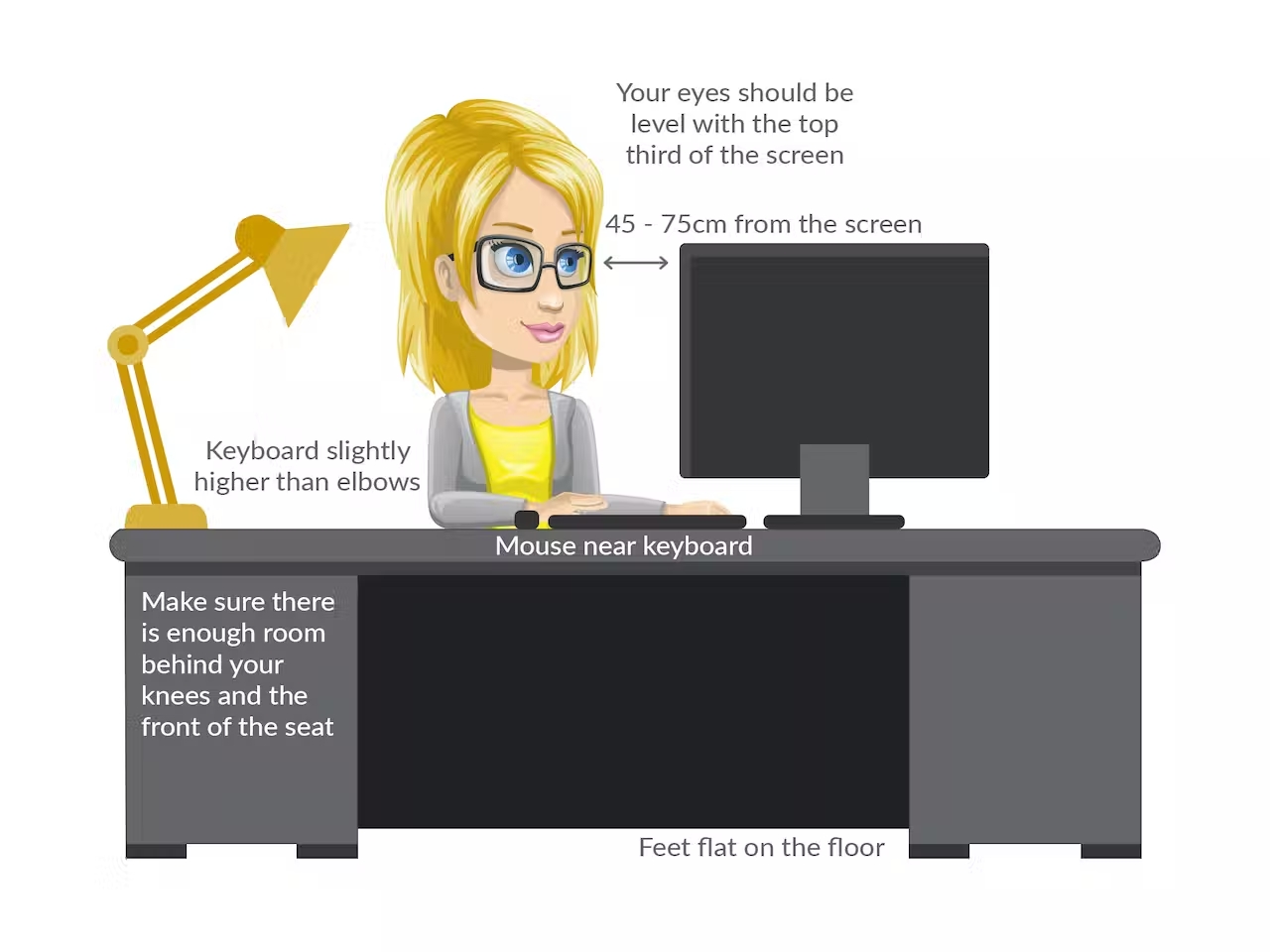
So, what are the top tips that you can do to restrict the potential damage to your eyes when working from home?
It’s vital that you maintain the right level of light during daylight through to the darker hours, but it is also very important to minimise glare on the screen as this can tire your eyes quickly.
Top Tips
- Ideally, you would have natural light coming in on either side of your monitor rather than behind or in front of you.
- Alternatively ensure you have ample task lighting (desk lamp, floor lamps and wall lights or even a ceiling pendant) as these will need to be on all of your working days.
- Floor and desk lights should be positioned at the side of your monitor.
- Wall lights are a great source of flexible task lighting; consider ones that can be adjusted, so you can direct the light exactly where it is comfortable.
- Consider using dimmable lights and bulbs to increase the effects your lights have on your workspace. This will allow you to coincide with the ever-changing natural light levels in the room.
- Have additional ambient lighting that you can use when daylight starts to fade.
- More lights offer more flexibility as you can choose which ones you have turned on. The more flexibility you have, the more comfortable your eyes will be.
- Adjust the monitor so that any items in your home (eg, mirrors) that reflect any light source aren’t reflecting it back onto your computer screen.
- Ideally, the monitor should be situated around 50 to 75 centimetres away from your eyes with the top of your screen being in line with your eyes.
- Use the 20-20 rule to help your 20/20 vision. Every 20 minutes look away from your screen for around 20 seconds. This exercises your eyes and gives them a rest from the harsh backlight of your screen.
So, look after your eyes with lighting that’s pleasing to the eye! Come and see more of our impressive range of home office lights…
Check List
- Ensure you have the best internet connection possible.
- Create enough space for your desk and any storage you may need.
- Get a comfortable chair.
- Get a multi-purpose printing machine.
- Source storage/filing cabinet to keep your workspace organised.
- Get great lighting from The Lighting Company.
Master Bedroom
Lighting a soulful sanctuary, things to consider:
- Plan for relaxing as well as sleeping.
- Relax and recharge.
- Get the right light levels for relaxing.
- What size bedside lamp to choose
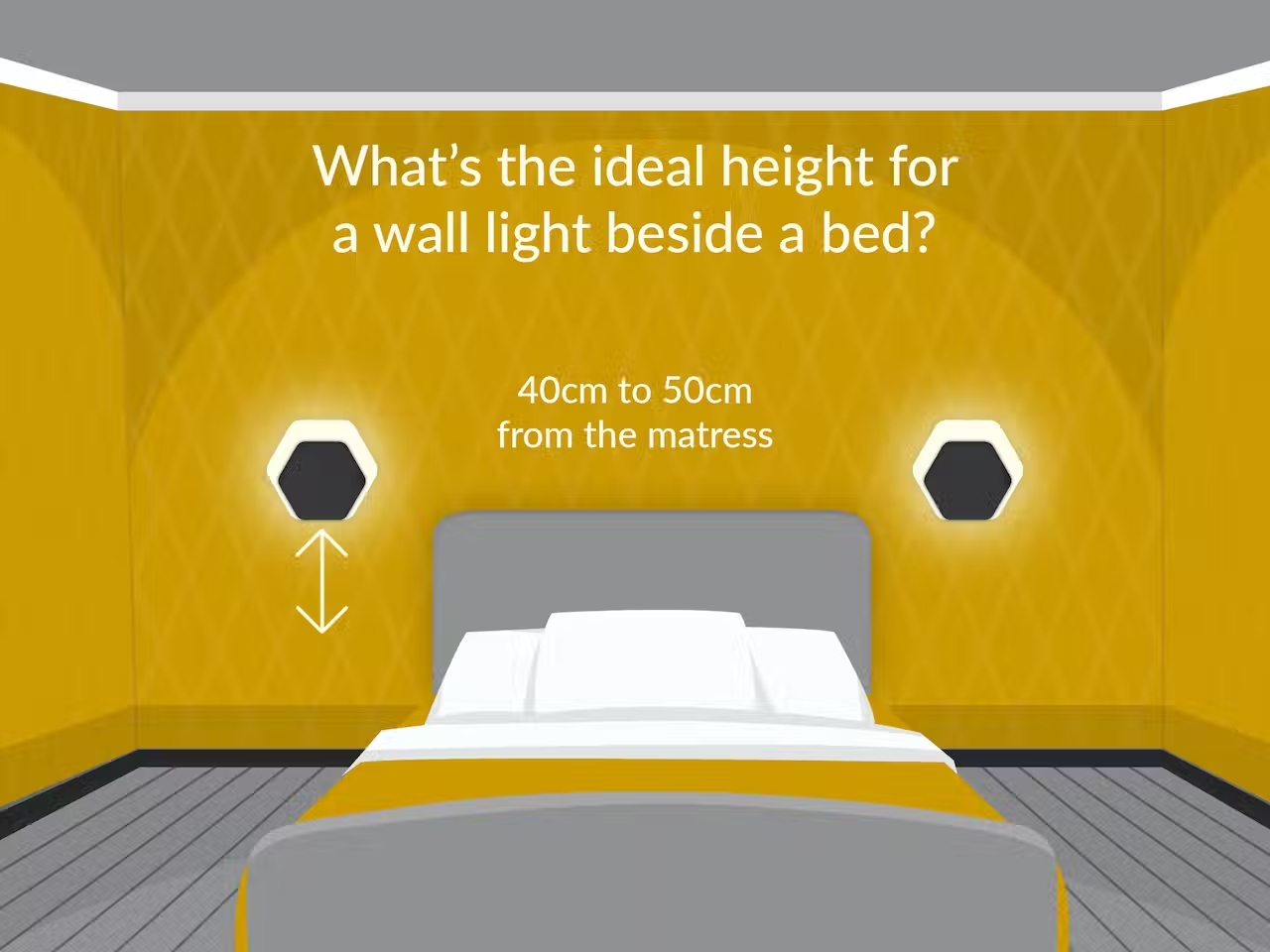
- Wall lighting for the bedroom.

Child’s or Teenager’s Bedroom
For this room, our advice would be to keep the design simple and easy to change. For young children especially their lights need to be hardwearing and easy to clean.
- A child’s rooms need to be versatile.
- Cater for easy refreshes for each stage of their needs and ever-changing tastes.
- Keep materials easy to clean and hard-wearing.
- Easy-fit shades are an easy way to update the lighting in this room without breaking your budget.
- For teenagers think about accessorising with Bluetooth speaker lights and smart bulbs to spruce up the design.
- When your child gets older add a desk for homework.
- Include task lighting.
- Add spotlights for when they need more focused lighting.
- Add decorative features like cushions, throws, wall art, mirrors, artificial plants and candles to create a relaxing environment for your teenager.
Spare Bedroom
The spare bedroom can often be multi-purpose. Sometimes it becomes a home office, a gym, a nursery or stays as a bedroom for guests to stay over.
If this room in your home does need to satisfy more than one use, there are a couple of things you can do.
- Have a sofa bed that can be folded away to create extra room when not in use.
- Have a room divider to section off areas when not needed.
- Use adjustable lights so you can alter the light to suit the purpose.
- Use plug-in wall lights or portable lighting to free up space
Bathroom Lighting
Great care must be taken when selecting bathroom lighting as it must conform to the current safety regulations. Where you have electricity and water you have an increased risk and this is why the regulations are quite specific.
For the purpose of the regulations, the bathroom is divided into zones and the light fittings are given a two-digit number known as an IP (Ingress Protection) number or classification. The first number of the IP rating indicates the degree of protection against dust particles or solid objects and ranges from 0 for no protection up to 6 for total protection. It is the second number that is of more interest in bathroom lighting as this represents the degree of protection from moisture and ranges from 0 for no protection up to 8 for a light that can be totally submerged in water.
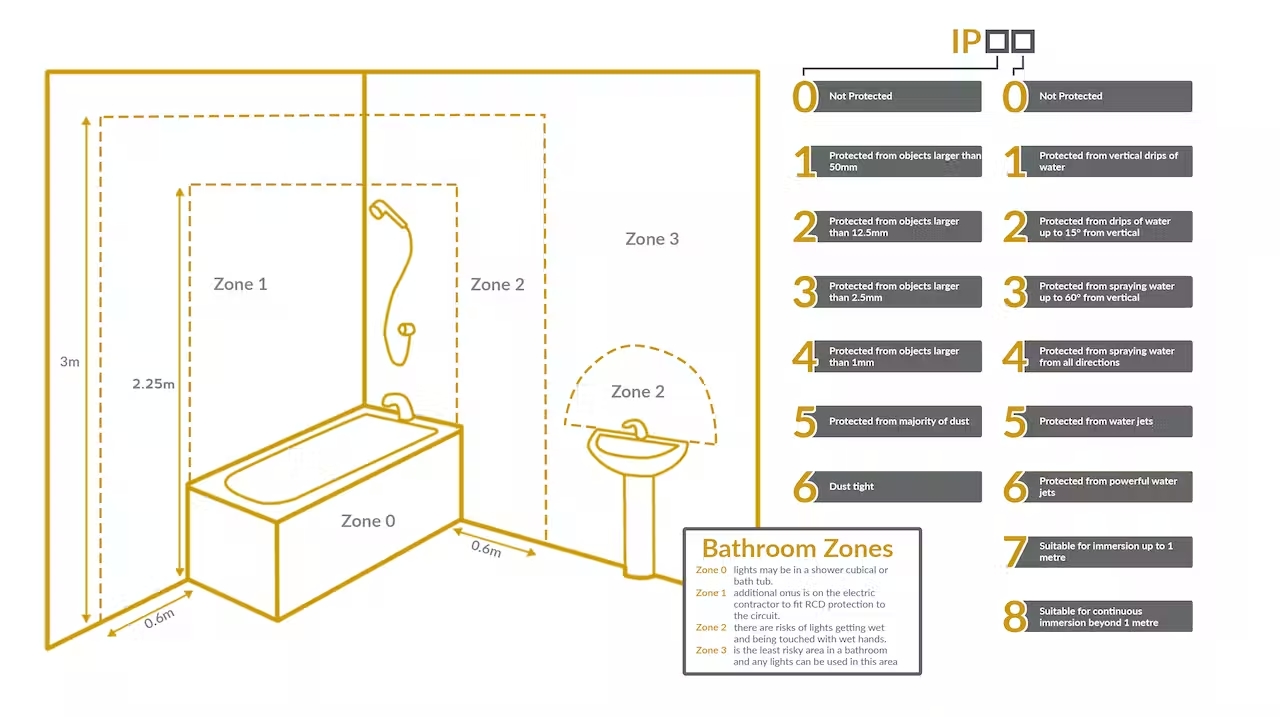
Zone 0
This is inside the bath or shower tray itself and any light here must be low voltage and rated IPx7 (the degree of dust protection does not apply to bathrooms). Lights with this rating will provide total protection when immersed in water.
Zone 1
Is above the bath or shower to a height of 2.25 meters above floor level and a light fitting with a minimum of IPx4 is needed here.
Zone 2
An area stretching to 0.6 meters outside the bath and above the bath or shower if over 2.25 meters. A light fitting of at least IPx4 is needed. Zone 2 also includes the area above the sink in a radius of 0.6 meters from the taps.
Not zoned
Refers to the area beyond zone 2 and was previously known as zone 3. There is no longer a specific IP number for this area and any light fitting can be used unless it is specifically marked as not for use in bathrooms.
Hallway, Landing and Stairwell
Lighting for these areas in your home can be similar. If you have a long drop stairwell a stunning cluster pendant would make an incredible impact.
- Have wall lights to line your hallway and landing.
- Consider flush and semi-flush lights if you have low ceilings.
- Cluster lights and pendant bars are ideal for stairwells.
Style
Making your new home match your style is so important, you want it to feel completely yours and not still hold the style of the previous occupiers. Sometimes this can start with a fresh coat of paint but ultimately you will start to think about your lighting.
Another thing to consider is the style of the property, if you’ve moved into a traditional home and most of your lighting pieces are very modern, they may not look quite right.
Budgeting
Regardless of whether you’re buying or renting, moving to a new home can be a whirlwind of emotions. It can be exciting, stressful and everything in between. Whether you’ve got a large budget or need to be a bit more careful with your cash, it can be tricky to know what’s worth investing in and how you can make some of the lighting pieces you may already have work in your new home.
For example, some of your table and floor lamps may work and can be integrated into the design of your home. If you can’t replace the ceiling suspension, either because you’re renting or you need to stick to a small budget then switch the shade to refresh the look, easy fit shades are an ideal way to spruce up the lighting in your home.
Regardless of your budget, it’s important to know how much light is needed for each room, your new home could vary drastically from your previous property. We have an easy way of calculating this, just remember to divide up home much light your room needs between different light sources, as the main ceiling light is the only form of light that can result in many dark spaces in your home.
